|

|
|||
|
Portland art blog + news + exhibition reviews + galleries + contemporary northwest art
|
||||




|
Tuesday 01.22.19 Enrique Chagoya Interview Just blocks away from Oregon's capital building, an exhibition titled Enrique Chagoya: Reverse Anthropology, From the Collections of Jordan D. Schnitzer and His Family Foundation at the Hallie Ford Museum of Art is one of the most relevant exhibitions in this incredibly loaded period of history. Through blending; economics, anthropology, race and a surprising amount of serious humor Chagoya gave PORT's Victor Maldonado an incredible one on one interview. The exhibition is on view in Salem through January 27.
 Enrique Chagoya's Bato character (all photos Jeff Jahn) V: Enrique, what are you working on in your studio? E: I am painting a codex. I've been working on some textures and some faces and I just needed to put some finishing touches on because the paint is drying. I needed to get that done for the day. 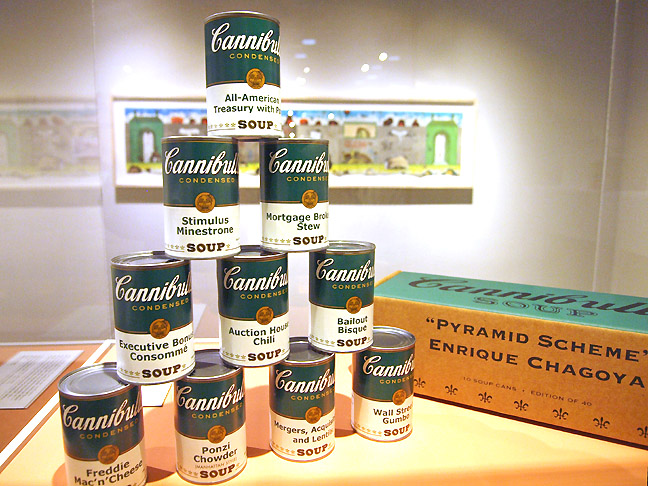 ... (more) Posted by Victor Maldonado on January 22, 2019 at 2:25 | Comments (0) PermalinkWednesday 09.13.17 Interview with Jennifer Steinkamp Jennifer Steinkamp is a digital art pioneer who creates vibrant, often mesmerizing
works that explore; education, science, pathology, art history, even politics.
A professor in the Department of Design Media Arts at UCLA, Steinkamp, is simultaneously both an educator and one of the best known digital artists on the planet.
In the following interview she discusses everything from her 1st grade teacher to technology... and far more difficult subjects
as two Mid-westerners might on the site at her eponymous exhibition at the Portland Art Museum on view through September 17, 2017.
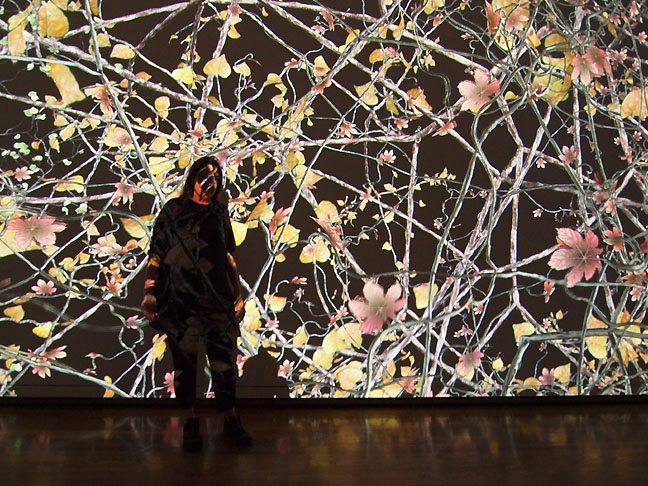 Jennifer Steinkamp in front of Orbit 11 at the Portland Art Museum (photo Jeff Jahn) Jeff Jahn: So pleased to have you here in Portland... it is a treat for those of us who followed your contribution to Dave Hickey's Beau Monde, a show, which is credited as a break of a certain kind of academic Postmodernism and ushering in a return to Pluralism. Since Beau Monde in 2001 we have been wondering when Portland would finally get a Jennifer Steinkamp exhibition? Jennifer Steinkamp: Beau Monde was such a great show, has he (Dave Hickey) come here? JJ: yes, over 15 years ago right after he received the MacArthur. Some careerist academics walked out of his talk and afterward at a cocktail reception all these Reed professors were trying to throw their jive at him. I remember he mentioned how he had not found much of a use for Derrida and they were horrified yet intrigued because JD was so central to their understanding. They were trying so hard to ask good academic jargon questions but he always had a specific historical or literary anecdote that would show that things were rooted to time and place. He just kept grounding things to their original inspirations and intellectual relevance... basically the real reasons we were still talking about them. JS: He's so funny ... (more) Posted by Jeff Jahn on September 13, 2017 at 11:14 | Comments (0) PermalinkFriday 12.09.16 Interview With Blake Byrne Blake Byrne is one of the greatest art collectors in the the country but its his approach and wonderful attitude towards collecting that makes his Open This End exhibition at Lewis and Clark College so invigorating. Speaking with him I got a sense of how art can and does exist beyond the cynicism of the age, bringing us back to core conversations about living on this planet together. Through sharing this collection and the philanthropy of his Skylark Foundation Portlanders have had a rare opportunity to get to know this one time resident. The exhibition consists of established masters like Warhol, Acconci, Kippenberger, Martin, Richter, Kelley and Nauman as well as younger artist like Wangechi Mutu, Marlene Dumas, Jennifer Steinkamp and Kehinde Wiley but its the vitality of discussion that shines through. Mr. Byrne is that rare collector who becomes a patron early in an artists career... he also owns works by some of my favorite Portland artists like Ellen George and DE May. We had a spirited discussion about life and art. 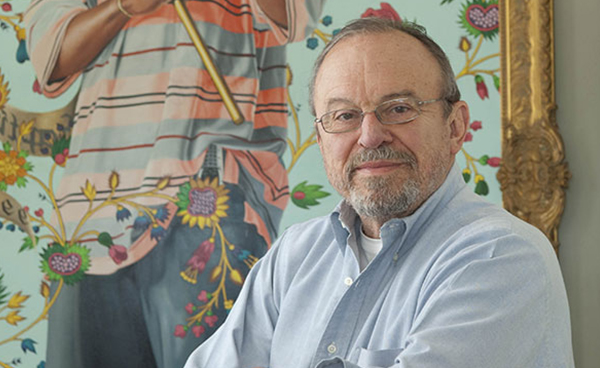 Blake Byrne with Kehinde Wiley's Saint John the Baptist II Jeff Jahn: I dont know if you have been able to travel to see this exhibition in Portland yet but part of what I am intending to do by conducting this interview in the gallery is to at least give you a vicarious sense of others looking at what you have so graciously ... (more) Posted by Jeff Jahn on December 09, 2016 at 13:07 | Comments (0) PermalinkSunday 10.16.16 Andy Warhol retrospective interview with Richard Axsom 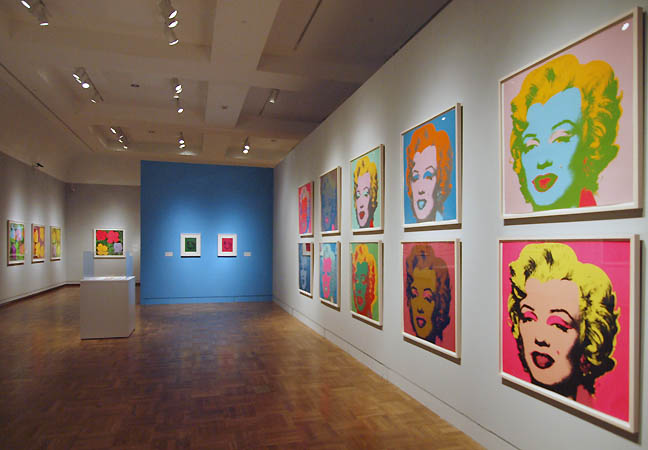 Andy Warhol Prints from the Collections of Jordan D. Schnitzer and His Family Foundation at the Portland Art Museum (all photos Jeff Jahn) The current retrospective at the Portland Art Museum, Andy Warhol: Prints from the Collections of Jordan D. Schnitzer and His Family Foundation is the largest of this seminal artist's output ever and should be on the to do list for anyone who can make it. There is breadth and scope here so PORT took a walk through to discuss the exhibition with noted print scholar and curator Richard Axsom, who contributed an essay to the catalog. Like so many Post WWII artists Warhol had mostly drained his work of allegory while introducing popular iconography as a kind of folk or kitsch context. This was something fascists had abused so Warhol's rise as an artist became a rehabilitation of sorts, bringing back iconic secularism without nationalistic jingoism and other subjugation. As the Cold War continued Warhol became became the defacto Pope of Americana, canonizing our pop culture saints and sinners, addressing capitalistic, societal and more underground iconography alike so I was eager to geek out with Axsom on one of the true greats and touchstones of the late Twentieth Century. Speaking as geek myself if we have inherited the Earth in the Twenty-first Century, Warhol is definitely one of our own... a kind of iconographer in chief who created an extended family with his art production. Jeff Jahn: Welcome to Portland... there is so much here let's do the obvious thing and start the discussion with the early work in this room. Richard Axsom: Well he was the best known and most celebrated graphic designer in in the late 1950's JJ: Paid very well for it too 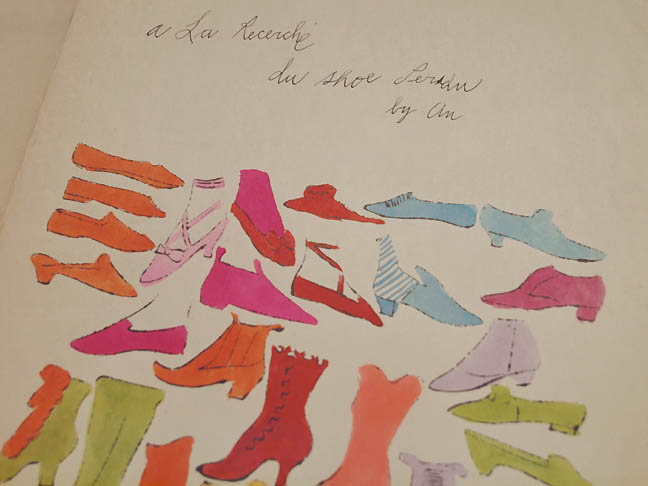 Andy Warhol(detail)À la recherche du shoe perdu, 1955 RA: A huge amount of money and this reflects the directorship that I. Miller gave him to oversee a major shoe campaign. What we see here though wasn't done for commercial promotion. It was done to be a self published artist book for friends. Here is what you might call the... (more) Posted by Jeff Jahn on October 16, 2016 at 12:06 | Comments (0) PermalinkThursday 03.31.16 Interview with Wangechi Mutu Hailing from Kenya but studied in the United States, Wangechi Mutu is internationally
renowned for merging anthropology, interwoven traditions and surrealism through experience as a different often more empathetic approach to the visual representation of women.
Recently, she sat down with PORT's Victor Maldonado to discuss her exhibition
The Human Hybrid at PNCA,
the inaugural show of the new Jordan D. Schnitzer Exhibition and Visiting Artist
Lecture Series.
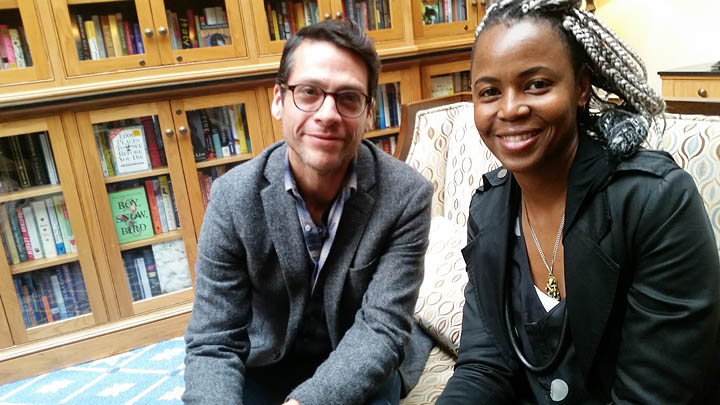 Victor Maldonado and Wangechi Mutu In a relaxed setting Mutu and Maldonado two sat down, talked shop and explored how, myths, belief systems and the way art history is coming around to the methodologies that cultural historians not tied to the art market have accepted for many decades. Watching them I was struck by the lack of sophist ideologies at play even when discussing old hierarchies like Picasso and established sculptural traditions, The conversation has been edited for clarity. - jeff jahn Victor Maldonado: How did you find your installation of your exhibition; The Human Hybrid? Wangechi Mutu: Oh, I love it. Yeah, it’s beautifully done. It is a small, elegant show and its serendipitous that this collector happens to have almost all of my prints. There are a couple of things he doesn’t have but it’s wonderful. V: Walking through the exhibit with different people one of the things that kept coming up was, “what is it like for you for these works to come together in this way?” W: It’s very satisfying. I mean, I’ve been making the work that you see as you walk in on the left... medical illustrations, essentially the histology series was made in 2005 on an actual Victorian print, these twelve different gynecological diseases and issues with the female reproductive organ. So, that whole moment is, you know, ten years ago, so it’s good to see this work living, breathing, looking better than when I first made it. V: It has a lot of impact? W: It has a lot of impact, so that’s always really good, but I think what is also important to me is that there is this kind of consistency, that I’ve been exploring a certain area of thought and interest in terms of material and subject matter. I mean, it holds together really well. The most recent one is a bronze... (more) Posted by Victor Maldonado on March 31, 2016 at 23:10 | Comments (0) PermalinkSunday 04.12.15 Richard Mosse: Exit Interview 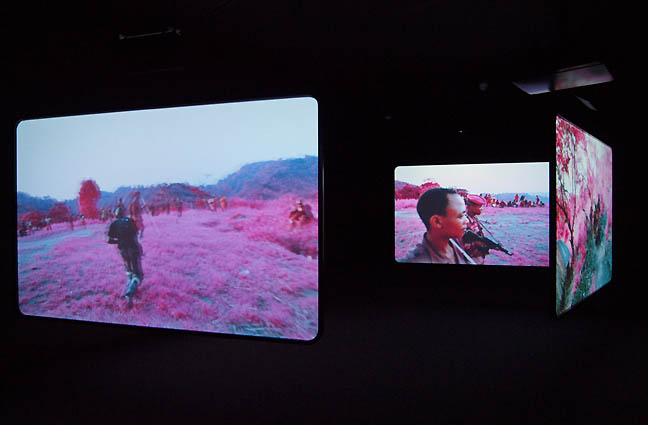 Installation view of Richard Mosse's The Enclave at the Portland Art Museum (photo Jeff Jahn) Richard Mosse's The Enclave at the Portland art Museum explores the uinimaginable experiences of disruption, diaspora and genocide in the constantly conflicted region of Eastern Congo. We sat down with him for an exit interview. Earlier we published a review, which captures many of the reasons it is among the most memorable exhibitions PAM has presented in the 16 years Ive lived here. Jeff Jahn: Let's start with your background? Richard Mosse: Both of my parents are artists who do country pottery. I guess craftspeople. So they were very concerned that I would also be a starving artist. I was forbidden. ... (more) Posted by Jeff Jahn on April 12, 2015 at 12:25 | Comments (0) PermalinkSaturday 09.13.14 Interview with Joel Shapiro On the occasion of his latest sculptural work titled "Portland" at the Portland Art Museum I interviewed Joel Shapiro just as he finished installing his latest constellations of parallelograms. For an artist who has been developing a post-minimalist studio practice in an earnest manner amidst an increasingly ironic world, Shapiro continues to investigate the concrete beauty of form and color and the liberating pull of taking a media where it hasn't gone before.
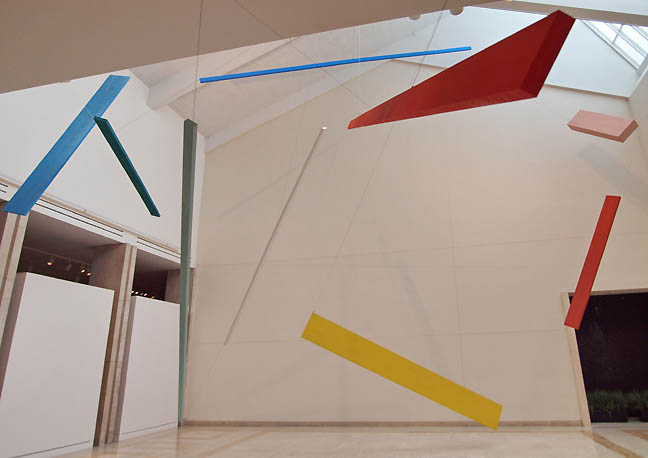 Installation view of Joel Shapiro's Portland 2014 on view through September 21, 2014 (all photos Jeff Jahn) VM: Thank you so much for letting me hang out with you today at the Portland Art Museum to talk a little bit about your work and your installation here in the Schnitzer Sculpture Court. You've been a great proponent of post-minimalism for quite a while now and it's amazing to see how fresh this instillation feels - how do you pull that off? JS: [Laughs] Senility. My theory is, you know, when you're really young you're uninhibited and make wonderful work. As you get more and more mature the work gets perhaps more theoretical - I'm teasing. As you get older it becomes more juvenile again. ... (more) Posted by Victor Maldonado on September 13, 2014 at 11:45 | Comments (0) PermalinkMonday 09.01.14 Interview with Michael Lazarus 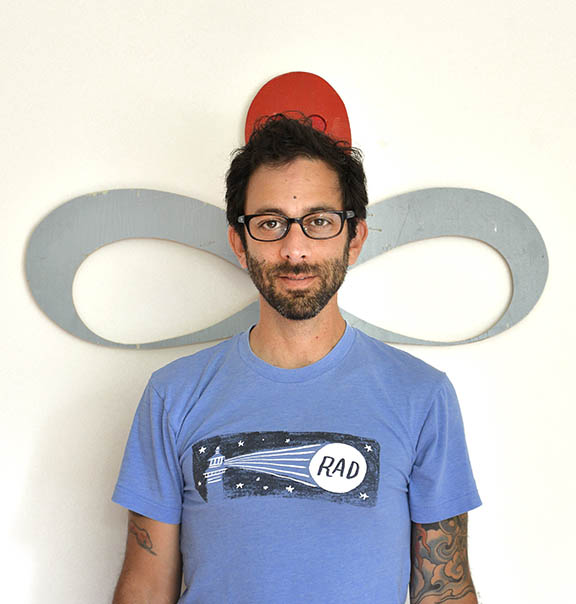 Michael Lazarus, who earlier this Summer had a solo show at Participant in New York (photo Christine Taylor) Jeff Jahn: I've been following your work for years. Before you moved to Portland actually and it is such a great opportunity to talk to you because I'm not certain that all that many Portlanders actually know your work... even though you've had 2 shows here already. Things can be oddly closed or at least inattentive sometimes so I suppose the best way is to get some of your initial background and find out how you came to art? At PORT we try to be the welcome wagon or greeter for the Portland Art Scene... besides I think you are one of the very best artists in the city. First question, what brought you to art? Michael Lazarus: Well I drew a lot when I was a child. I had a natural ability for it. But in retrospect when I became an early teenager I got better and better. More skilled and more skilled. I also got really disillusioned with it and now I can see it was because everything I was doing was essentially copying. I was copying photographs and I was copying comic books. Even the things I drew from observation were copying the things I observed rather than including an expressive aspect and I stopped around 13. I just stopped. Then later, still a teenager, we lived in Miami and I was in a huge public high school and the school system wasn't so great. I wasn't real happy there and I had to take an elective. So I thought, "ok Ill take art," because I knew I could do it. But I didn't want to be in the beginning art class, I wanted to be in the best one... (more) Posted by Jeff Jahn on September 01, 2014 at 11:45 | Comments (0) PermalinkMonday 06.02.14 Let Them Look: An Interview with Luc Tuymans 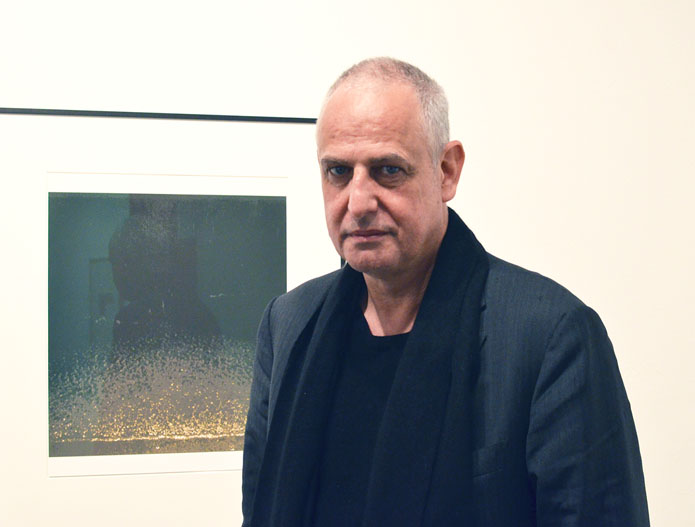
Luc Tuymans, PNCA's Feldman Gallery, 2014 (photo Amy Bernstein) Luc Tuymans' paintings are renowned throughout the art world for their chilling diagnosis of humanity. Tuymans' oeuvre is haunting, often combining the sacred with the mundane in order to instill a desired paranoia. Tuymans' work is attributed to the revival of the death of painting and has been exhibited around the world. . . .(more) Posted by Amy Bernstein on June 02, 2014 at 10:18 | Comments (0) PermalinkFriday 05.23.14 Interview with Dana Schutz and Ryan Johnson Last November, I sat down with the Brooklyn based, internationally renowned,
figurative painter Dana Schutz and mixed media sculptor Ryan Johnson before
their joint lecture for the Oregon College of Art and Craft's Connection Lecture
Series . We spent an hour talking about their visit to Portland, exploring what
motivates each of their distinctive practices, as well as their mutual understanding
as individual artists (married to each other) as well as the professional skills
necessary to navigate a career as working artists.
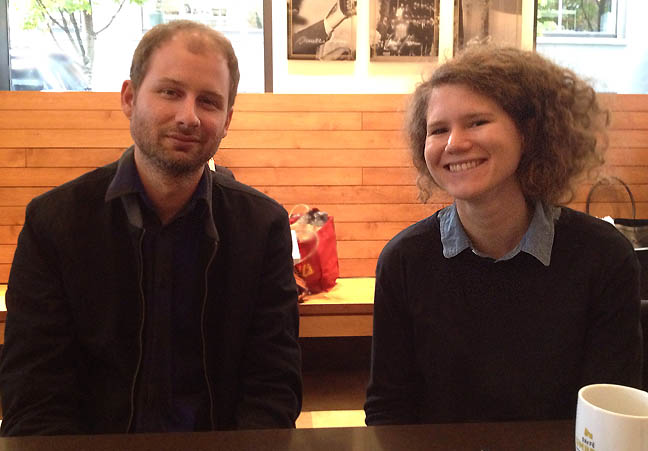 Ryan Johnson and Dana Schutz (photo Victor Maldonado) VM: Thank you Dana and Ryan for joining me today. I know you're both pretty tired having flown in from Berlin. When did you get into town? DS: We got in yesterday evening. VM: Wow, that's not much time to enjoy the friendly confines and the beautiful weather. DS: It's so beautiful here. I'm struck by how it smells really fresh. We just went to the bookstore... RJ: Powell's. DS: Powell's bookstore, which is amazing. Insane! VM: What rooms did you get to explore around Powell's? DS: We went to the art section. VM: The Pearl Room? DS: Yeah. RJ: Some good biographies. DS: Yeah, Ryan got a lot of books. RJ: We heard some interesting... DS: Intercom... RJ: Intercom action about a lost bandanna that was very Portlandia. DS: I know, it made us so happy. ...(more) Posted by Victor Maldonado on May 23, 2014 at 18:51 | Comments (0) PermalinkSaturday 03.15.14 Interview with William Pope. L  William Pope L. (photo Gary Wiseman) William Pope. L's work engages, even embraces the absurdity of race and in February 2014 returned to Portland for his exhibition Claim at PSU's Littman Gallery. It was a reprise after 2003's legendary exhibition, eRascism, at PICA. With its rotting onions and hot dogs, eRascism was one of the most memorable exhibitions in Portland history so PORT sent Gary Wiseman to query Pope. L about his practice and his sequel in Portland. Gary Wiseman: Why did you choose to revisit Portland in 2014? For some reason the timing feels significant. William Pope.L: I think returns, like endings, are always significant in some way and my return to Portland is particularly pleasurable. ... (more) Posted by Gary Wiseman on March 15, 2014 at 10:12 | Comments (0) PermalinkThursday 11.28.13 Interview with Kengo Kuma Portland has many connections to Japan including; intensive volcanism, a climate
with ample moisture, earthquakes, tsunami and of course a strong Japanese community.
Still, it is Portland's world class Japanese Garden that truly seems to transport
us to another culture (see the current Samurai show at PAM then visit the garden
for a complete day of immersion).
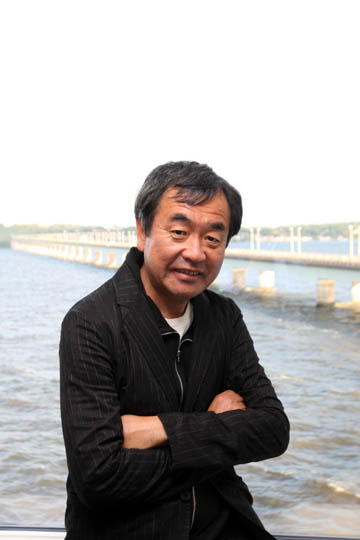 Kengo Kuma In 2010 we were thrilled that Kengo Kuma was chosen as the architect for the expansion of the Japanese Garden. He is perhaps the world's foremost architect of subtlety and materiality. Frankly, most of the other famous architects I've spoken to revere his work in much the same way guitarists like Eric Clapton and George Harrison would speak of Jimi Hendrix. His work is startling for its unpretentious clarity while still being adventurous. As a bridge between Japanese tradition and the (global) future he perhaps has no equal in architecture. He is considered a philosopher of the site and his buildings always integrate themselves rather than stand out as context-less novelties. In October I had the rare privilege of speaking with Kengo Kuma and his Project Manager for the Portland Japanese Garden's expansion, Balazs Bognar. We all left feeling as though something significant had come out of it. 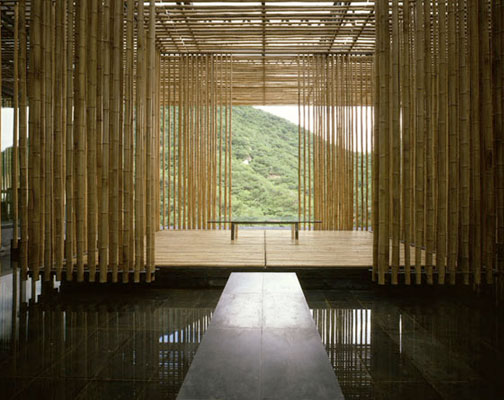
Great (Bamboo) Wall (photo Satoshi Asakawa, courtesy Kengo Kuma and Associates) JJ: I could ask you about so many of your projects, the Great (Bamboo) Wall is fantastic in the way the semi transparent bamboo walls seem to make the walls hover in space. But perhaps the Wooden Bridge Museum is the one with the most connection to Portland's project since they are both on steep mountainsides forming an enclave that draws people up the slopes and they both have a similar wooden lattice overlay. 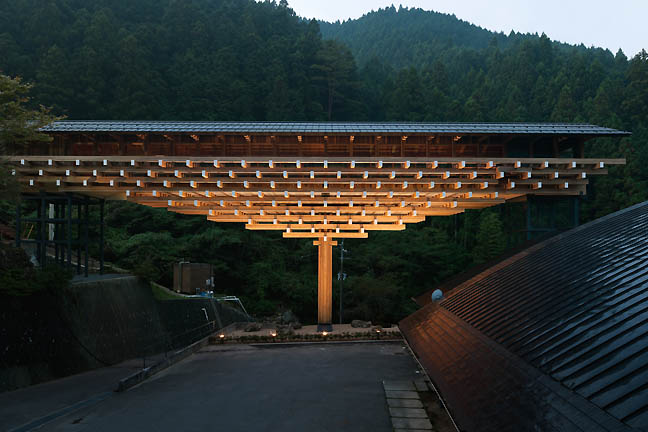 Yusuhara Wooden Bridge Museum (photo Takumi Ota, courtesy Kengo Kuma and Associates) KK: The Wooden Bridge Museum... the site is a very deep mountain with a small village. The main industry of the village is forest products and as the forest industry of Japan is getting worse and worse so they develop some new designs which activates the new forest industries... (more) Posted by Jeff Jahn on November 28, 2013 at 23:07 | Comments (0) PermalinkSunday 11.17.13 On Understanding and Being Understood: Interview with Anna Craycroft The opening lines of the press release for Anna Craycroft's C'mon Language reads "C'mon Language is an exhibition in pursuit of an artistic vocabulary." In conversation, Craycroft indicates that she had never intended to create a community. Instead, the exhibit operates as an immersive inquiry into epistemology, pedagogy, and delivery. Drawing corollaries between alternative educational approaches and the artists' creative practice, she built a space for participants to explore how they/we/I might 'make ourselves understood'. Brooklyn-based artist Anna Craycroft's work plays with the symbols and methods employed within different didactic spaces. Craycroft received her MFA from Columbia University School of Arts in 2004 and her BFA from the Slade school in 1998. I had the pleasure of speaking with Craycroft one Friday morning in September as the exhibition was preparing for its culminating presentation.
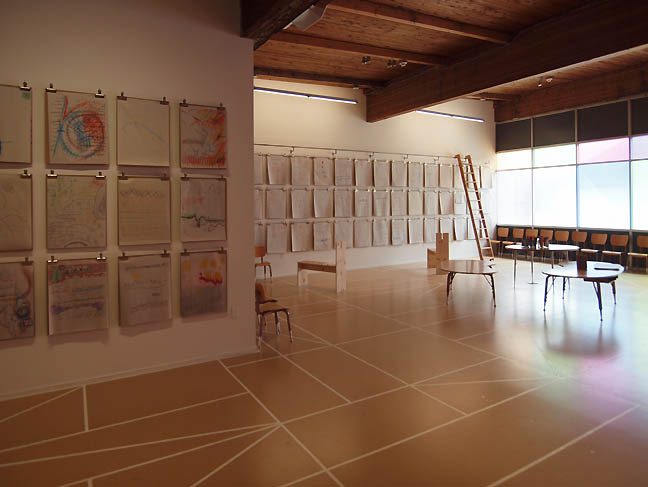 C'mon Language, Installation View, Anna Craycroft, 2013, photo by Jeff Jahn TA: It seems like the guiding question here is ‘How do we make ourselves understood’ so maybe that’s a good place to start. Who do you see as the ‘we’ in that question and to whom are we making ourselves understood? AC: In this case the word ‘we’ actually means ‘I’. The structure of the sentence sets up a reflexivity - the ‘we’ applying to the process of ‘making ourselves’ – that replaces collectivity with plurality. The question frames the question ‘how do I make myself?’ as a like effort to be performed independently by multiple individuals side by side. TA: As a provocation, the question presumes some barriers to understanding- AC: -limitations, I would say- TA: -yeah, limitations. I’m wondering what some of those might be and how you or some of the others involved have tried to negotiate that here. AC: Any vocabulary or lexicon has a set of components. It’s limited for practical purposes, but there’s always the potential to expand. The question of ‘how’ is more of a process of accumulating options or alternatives or existing forms rather than pointing out their limitations. The how is kind of equivalent to saying what are all of the different ways in which- TA: -we might make ourselves- AC: -we attempt to make ourselves understood... (Continued...) Posted by Tori Abernathy on November 17, 2013 at 8:40 | Comments (0) PermalinkWednesday 10.23.13 Interview with Jorge Pardo 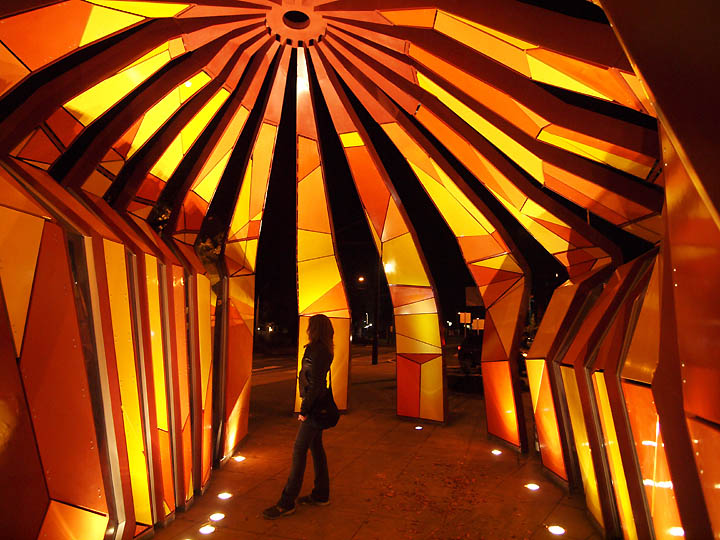 Streetcar Stop for Portland (detail inside at night) photo Jeff Jahn Jorge Pardo's work raises questions about the artificial separation of art, design, architecture and the orthodoxies that shape the way we consume all of them as cultural products. For his 1998 exhibition at MOCA he paradoxically shifted the site from the museum to a home at 4166 Sea View Lane, which he had built for the exhibition. Afterwards he moved in, upending the entire patron/institution/artist dynamic. He now has a similar, but more extensive project in the Yucatan called Tecoh. Rather than simply show in white box galleries he has even created installations that function as lighting for restaurants. In 2010 he was awarded a MacArthur fellowship. In 2008 he was commissioned to reinstall LACMA's pre-Columbian galleries but for PORT he came to speak about his Station for Portland Streetcar, commissioned by the Regional Arts and Culture Council (RACC). 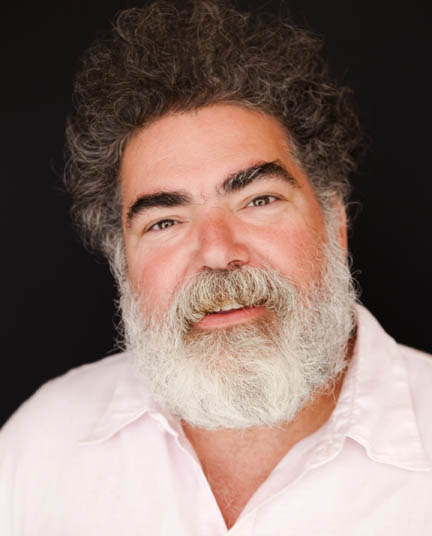 Jorge Pardo Jeff Jahn: You are originally from Cuba? Jorge Pardo: Yes I was originally born in Cuba and my family emigrated to Chicago in 1969. I was six so it is where I spent most of my life as a child. I pretty much grew up there...(more) Posted by Jeff Jahn on October 23, 2013 at 0:47 | Comments (0) PermalinkSaturday 09.14.13 Interview with Jeff Fleming of the Des Moines Art Center In Portland, the artists as a scene create most of the civic art energy but there is a lot we can learn from other places, especially even smaller cities that do things exceptionally well. Des Moines Iowa is one of those places, they don't just have community... they have one that insists on excellence. The Des Moines Art Center with its world class architecture and contemporary collection is certainly their crown jewel so (disclosure) when my significant other had an exhibition there earlier this year I took the opportunity to speak with their director Jeff Fleming.
Fleming has a real passion for art that is coupled with a great deal of connoisseurship and discretion, which is why he is one of the most admired museum directors at one of the most admired (and focused) art museums in the country. 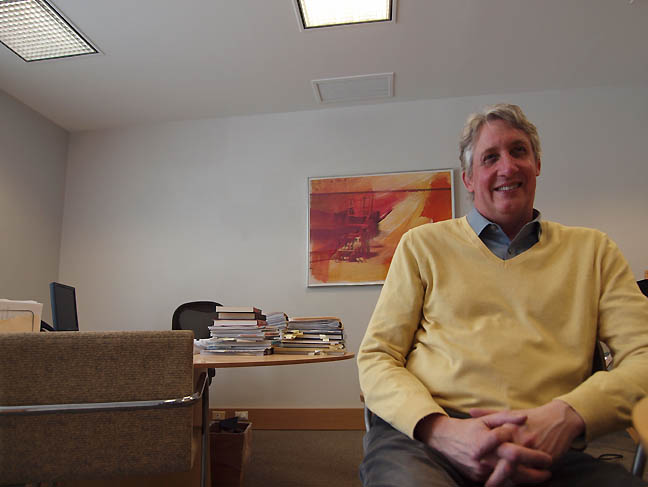 Jeff Fleming, Director of the Des Moines Art Center Jeff Jahn: What a pleasure to finally get to speak with you, a lot of museum directors that I have spoken to over the years really admire what happens here. From the first time I visited this museum I was really struck with just how good the collection was, even how consistently good and fresh the pieces felt in the galleries. It brings up questions about smaller cities in so called flyover states.... if you have something good how do others find out about these gems that are frankly hidden right out in the open? In particular, so many Midwestern cities have such great things... they aren't New York or on the West Coast yet these museum have a serious value set that might be somewhat of a dieing breed. Sometimes on the West Coast I sense more emphasis is placed on just getting people inside the doors and selling tickets. Whereas here you've done away with the admission fee and I am interested in how something so excellent and accessible came into being in a small but still important city like Des Moines. Are there lessons we can learn on the coasts? Jeff Fleming: There are many questions, so we'll just target some of them. One of them, I don't think this community takes us for granted. They do appreciate us, at least as far as I can tell and they do acknowledge that this is a place of quality and they are very proud of us. It is a wonderful thing. We have both been in several communities and I have lived in a place where the community did not necessary appreciate the institution. I see this as a very very different place. JJ: How did that occur? JF: Well from day one there was and continues to be the very best you could be in order to participate on a global scale. Posted by Jeff Jahn on September 14, 2013 at 0:30 | Comments (0) PermalinkFriday 07.19.13 Talking shop with Marc Treib 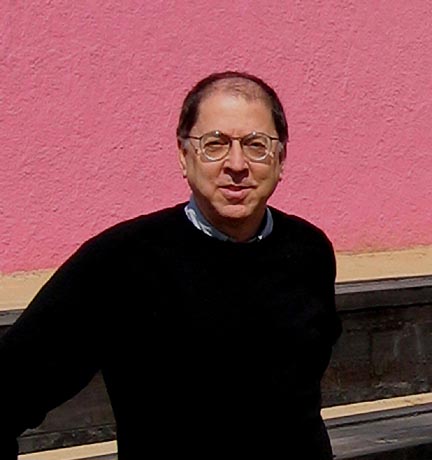 Marc Treib On the occasion of the Portland Japanese Garden's Noguchi exhibition this past May I had the honor of speaking with Marc Treib one of the world's foremost historian/critics on Noguchi, land art and the design of public spaces. He is the author of numerous books including, Noguchi in Paris: The UNESCO Garden (2003), Settings and Stray Paths: Writings on Landscapes and Gardens (2005) and Space Calculated in Seconds (1996). He is Professor of Architecture Emeritus, University of California, Berkeley. This is the final weekend for the Noguchi show (PORT also interviewed its curator) at the Portland Japanese Garden. 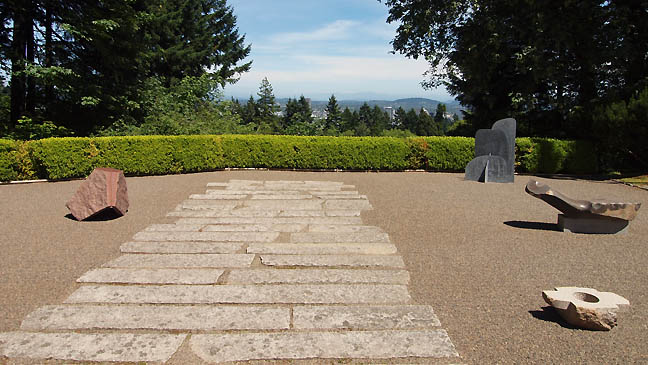
Noguchi at the Portland Japanese Garden (photo Jeff Jahn) JJ: You are in Portland because of your relationship with Noguchi's work and the Japanese Garden's 50th anniversary show. In particular you focus on "the sites", be it a public space or former studio. I've been to the Houston sculpture garden, The Long Island Studio and the California Scenario. I haven't been to the UNESCO or the studio in Japan, which looks amazing. There is something about the Japanese garden format that laid the groundwork for his work which wasn't just object oriented sculpture but an environment for experience that speaks most to me. MT: The California Scenario is the best one.... (more) Posted by Jeff Jahn on July 19, 2013 at 10:41 | Comments (0) PermalinkWednesday 05.22.13 Interview with Critical Art Ensemble 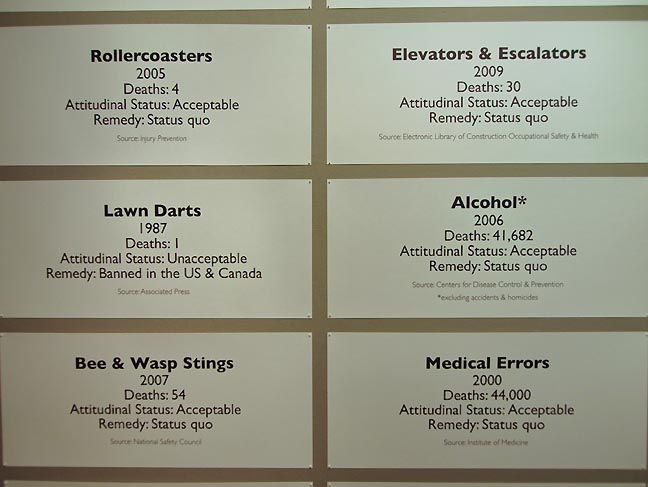 Critical Art Ensemble's Acceptable Losses (detail) at PNCA's Feldman Gallery On March 15th around Noon, I spoke with Critical Art Ensemble members Steve Kurtz and Lucia Sommer. Tori Abernathy: You've been in the planning stages for Acceptable Losses over the past four years now, but the show seems strangely appropriate in light of recent happenings. What led to focusing on themes of death and suicide in this location, Portland, or in the Feldman Gallery? Steve Kurtz: Current events. The original idea was to talk about human sacrifice in relation to war-what's acceptable and not acceptable. It took years to get this show organized (mostly due to funding problems). Fortunately, by the time the show was finally possible and the budget appeared, it seemed even more appropriate in spite of one of the wars being "technically" over. Newtown had just happened, and the VA announced that the military was facing its most significant public health crisis ever, given the soaring suicide rate among veterans. For the first time we are losing more combat vets to suicide than we are to the enemy. Just presenting the numbers related to suicide gave us an avenue to talk about the war, to talk about military service, and in some ways to talk about the political economy of war. So all the elements just fell into place. We took the edge off with the block party, though. TA: Which is hopefully going to be a lot of fun... (more) Posted by Tori Abernathy on May 22, 2013 at 23:16 | Comments (0) PermalinkFriday 05.03.13 Interview with Matt Kirsch, Associate Curator of the Isamu Noguchi Museum 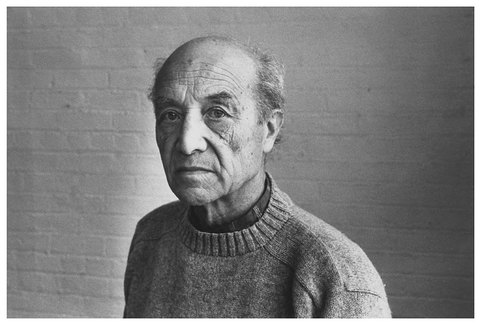 Isamu Noguchi, Image Courtesy of Pace Gallery "Isamu Noguchi: We Are the Landscape of All We Know" is on view at the Portland Japanese Gardens until July 21. Isamu Noguchi was a brilliant sculptor and ideological innovator who pushed and challenged the notions of space and form into unprecedented territory. His oeuvre extended from freestanding sculpture into public parks and industrial design. To Noguchi, all of his work was art, and all of it maintained the inherent potential to shape the way we live and think. His legacy reverberates infinitely in today's art and design world as we endeavor to continue efforts to raise consciousness and pique the intellect through the shape of our created environments. I had the chance to talk with Matt Kirsch, the associate curator of the Isamu Noguchi Museum, the other day about Noguchi's art and life. . .(more) Posted by Amy Bernstein on May 03, 2013 at 10:19 | Comments (0) PermalinkFriday 02.22.13 Toko Shinoda: Grande Dame of the Understated 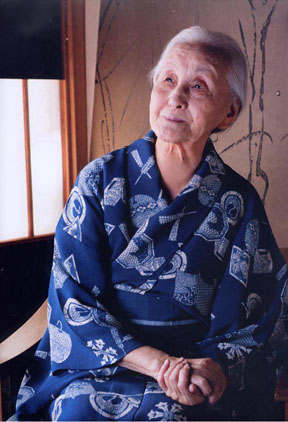 Toko Shinoda Yohaku is the Japanese term used to refer to the abundance of white space within visual composition. This white space is also referred to as the the ideological "nothingness" of Chan Buddhism in China and Zen Buddhism in Japan: the nothing that is everything, a powerful entity. . .(more) Posted by Amy Bernstein on February 22, 2013 at 20:59 | Comments (0) PermalinkThursday 12.20.12 Interview with Bruce Conkle 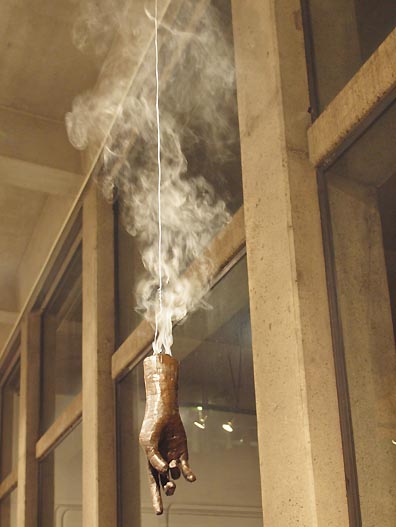 Mystic Mitt (Earth), 2012 from Tree Clouds Although today Portland is full of conceptual and new media artists, when I first moved here there was really only one active practitioner on display, Bruce Conkle. His phantasmagorical time and sense scapes have evolved over the years making him the dean of eco art in Oregon. All the while his work has celebrated the odd boundaries between the natural and unnatural, ideal and real in his work and life (he does have a mock wood grain tattoo after all). Conkle's work isn't shrill or a scold so much as a court jester putting on a subtle Blackfriars style roast regarding the state of the planet and humanity's role in its current situation. Thankfully nature isn't always portrayed as friendly. As an artist he has exhibited at Brazil's A Gentil Carioca, New York's Jack the Pelican, Living Art Museum in Iceland as well as the Gobi Desert with Eco-baroque, his collaboration with Marne Lucas. He's also the lone conceptual/new media artist (ie craft or handling of media is downplayed to play up conceptual content) to receive the Hallie Ford Fellowship (in 2010). The first crop of 9 Ford Fellows will have an inaugural exhibition at the Museum of Contemporary Craft in January 2013. ...(more) Posted by Jeff Jahn on December 20, 2012 at 12:20 | Comments (0) PermalinkThursday 10.04.12 Luc Tuymans: Loosening Up It is the eve of Luc Tuymans innaugural exhibition at David Zwirner's new London Gallery, giving us the opportunity to publish this interview conducted last June at the artist's studio in Antwerp.
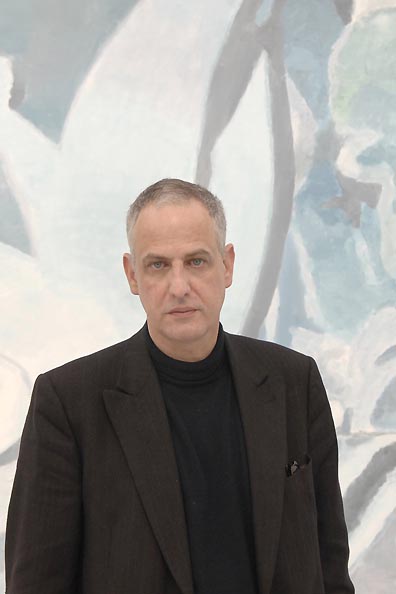 Luc Tuymans. (c) 2012 Luc Tuymans Gary Wiseman: It has been said that it is impossible to place you within a school of painting. However, you have been extremely influential and could be seen as having established an entirely new school of painting. What is the philosophy of the Luc Tuymans school? What is its lineage? Luc Tuymans: Nothing, I hope, because I am not planning on making a school. Even the article, I mean, though well meant, about the Tuymans Effect [Jordan Kantor], I thought it was a bit difficult, I mean, it is not because of the fact that ten years later Havekost crops the face of which he makes a portrait the same way I did, that it is the same painting. Because it is painted totally differently. The same goes for the other people in that article. So I think that... (more) Posted by Gary Wiseman on October 04, 2012 at 0:10 | Comments (0) PermalinkWednesday 08.29.12 Working with Ellsworth, an interview with Mark and Rae Mahaffey 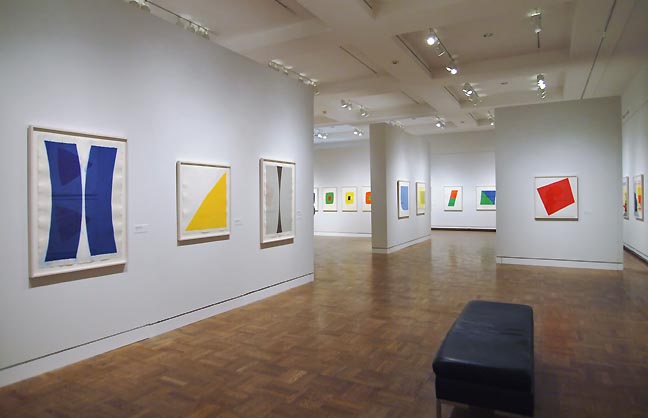 Installation view of Ellsworth Kelly/Prints at the Portland Art Museum (all photos Jeff Jahn) Ellsworth Kelly is the world's greatest living abstract painter and the extensive show of his prints on view right now at the Portland Art Museum details just why. Part of the exhibition's greatness is the way it exudes the generous charm of the sublime, not unlike a sunset on the beach or a baby's smile. It's hard to believe that simple line and color can be so powerful, but it is and bears up well under close scrutiny where slight variations in form or color can matter so much. The exhibition itself is a slightly different version of LACMA's critically received show and everyone should take this viewing opportunity, which presents so much depth and breadth from a single artist. It is a perfect summer show. Kelly is perhaps single-handedly responsible for showing how formal work need not follow Clement Greenberg's edicts of material as form. The lesson that it isn't the material but the message... in this case, one of gracious reception and reciprocity, which made Kelly the lynchpin of Dave Hickey's 2001 art world shattering Beau Monde exhibition at Site Santa Fe... the exhibition that made beauty worthy as a subject again. His prints carry that spirit in a way that is perhaps even more approachable than the paintings and sculpture and we thought the occasion of his exhibition, culled from Jordan Schnitzer's vast collection was a great excuse to talk to Portland's very own master printer Mark Mahaffey and his wife Rae about what it was like to work with the man. Jeff Jahn: So Mark, you started at Tyler Graphics and then went to Gemini GEL where you worked on Ellsworth Kelley's prints? Mark Mahaffey: Yeah in 1989 I was hired away from Tyler to work for Gemini GEL. His (Ellsworth) was actually the... (more) Posted by Jeff Jahn on August 29, 2012 at 11:17 | Comments (0) PermalinkThursday 03.15.12 Interview with Richard Serra 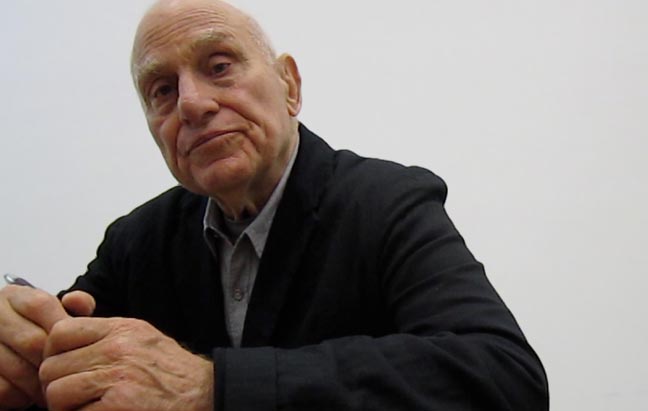 Richard Serra (2012) photo & interview by Paul Middendorf Set for an encounter with the art and the man I scurried into The Menil Collection to attend the meet and greet press event for Richard Serra Drawing: A Retrospective. There was already quite the crowd forming, so I made sure to get a quick glimpse of the show before the rooms filled up with people. Here is a short description from the Menil Press Release Richard Serra Drawing: A Retrospective is the first-ever critical overview of the artist’s drawings, as well as the first major one-person exhibition organized under the auspices of the Menil Drawing Institute and Study Center. The exhibition - which opened at the Metropolitan Museum of Art in New York, traveled to San Francisco Museum of Modern Art (SFMOMA), and now concludes at the Menil Collection - traces the crucial role that drawing has played in Richard Serra's work for more than 40 years. ... (more) Posted by Guest on March 15, 2012 at 10:31 | Comments (1) PermalinkSunday 02.26.12 An Interview with B. Wurtz 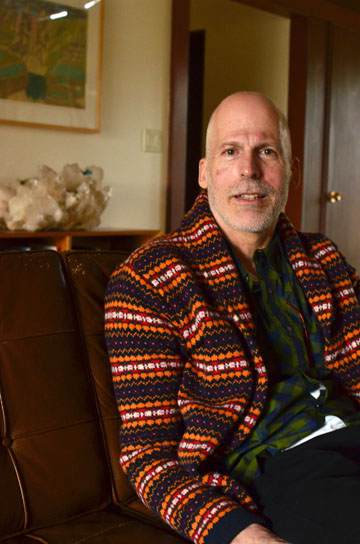 B.Wurtz, Portrait of the Artist by Amy Berntein, 2012 B. Wurtz is a lyrical formalist, a classicist, and a provocative senator of the mundane. He poetically points to the sidelines of our daily lives in an effort to point out the beauty and significance of an immense reservoir of objects discarded as refuse. From what we regard as worthless, he culls a rich vocabulary with which to form his oeuvre. Talismans of culture are formed out of plastic bags and wire as Wurtz asks us to pay attention to our surroundings and to the moments that actually make up our lives. . .(more) Posted by Amy Bernstein on February 26, 2012 at 23:13 | Comments (0) PermalinkTuesday 11.01.11 Interview with Chris Burden 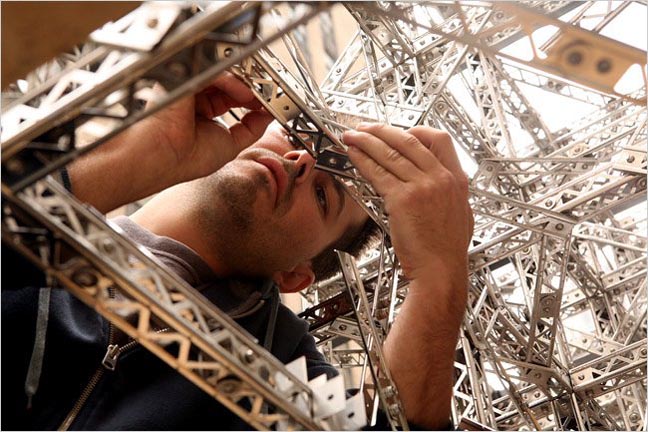 One of Chris Burden's assistants at work on What My Dad Gave Me (2008) Gary Wiseman: Let's start with the Three Ghost Ships currently on display at the Portland Art Museum. Will you talk about the development of the project? How did it begin? How long did it take? What were the challenges? Chris Burden: Let's see. The Ghost Ships. They came about by being asked by Mary Jane Jacobs who had been chief curator at MOCA in LA but was now working in Chicago as an independent curator. She was in charge of the Spoleto Music Festival, the art component of it, in 91'. She invited 20 different artists to do projects as part of the music festival, I was one of them. I had been conscious of this boat designer Phil Bolger who was known for making these seaworthy small boats that were ocean capacity and were real simple to build. He was an anti-yachting kind of guy. So I proposed that... (more) Posted by Gary Wiseman on November 01, 2011 at 11:17 | Comments (2) PermalinkMonday 09.05.11 Interview with Kristan Kennedy 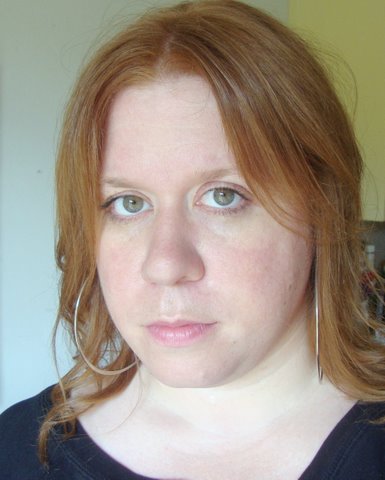 Kristan Kennedy, PICA's Visual Arts Curator Kristan Kennedy is the visual art curator at Portland Institute for Contemporary Art. With this year's Time Based Art Festival just around the corner (the festivities kickoff this Thursday), I kidnapped her mid mad dash to talk about her insights into the city of Portland, its art scene, and the evolution and orchestration of the most exciting art event of the year, TBA. . .(more) Posted by Amy Bernstein on September 05, 2011 at 15:32 | Comments (0) PermalinkWednesday 06.29.11 Murderer and the Victim: An Interview with Silvia Levenson 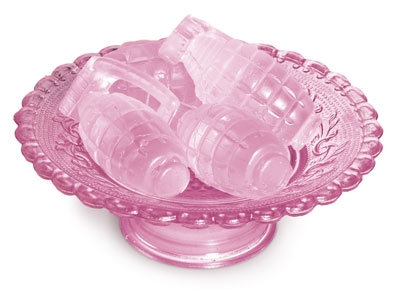 Silvia Levenson's Something Wrong? (2005) Silvia Levenson is an international artist who was born in Buenos Aires, Argentina in 1957 , lives and works between Buenos Aires and Italy. Her work is part of Fine Art Museum, Houston; USA, New Mexico Museum of Art, Santa Fe; Corning Museum , Corning USA; Bullseye Glass Company, Portland, OR; Alexander Tutsek-Stiftung , Munich, Germany and many others. She was in town this last weekend for Bullseye's BECon 2011 and Crossover so I had the opportunity sit down and talk with her. 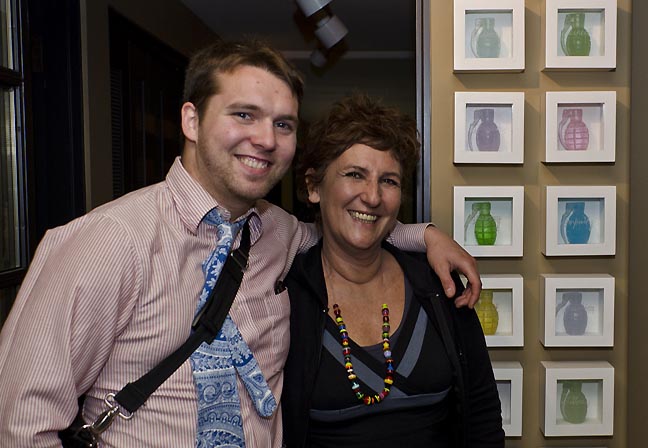 Alex Rauch and Silvia Levenson (Photo Steve C. Immerman) AR: Your interplay between title and the work seem salient. How important is word play for your pieces? Do the titles imbue more meaning? SL: Yes-for me titles are an important part of the work. I work in the space between reality and imagination. The title's help me extend... (more) Posted by Alex Rauch on June 29, 2011 at 13:20 | Comments (0) PermalinkTuesday 05.24.11 The Beginning of the End Of Us: a Conversation with Deborah Kass 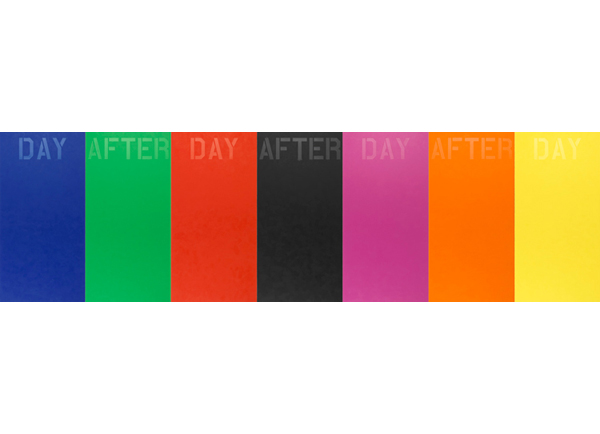 "Day After Day", 2010, Oil and Acrylic Deborah Kass's paintings are revelations. Written and designed with brighter times in mind, she appropriates art history and pop culture in order to comment on the now as well as the then. Recontextualized and upended, the result is an existential question shrouded in glamour. Employing seduction and nostalgia, . . .(more) Posted by Amy Bernstein on May 24, 2011 at 6:37 | Comments (0) PermalinkThursday 02.03.11 Staring: An Interview with Catherine Opie  ©Catherine Opie, "Jenny (Bed)," 2009, courtesy Regen Projects, Los Angeles Best known for her multiple series of portraits of lesbian, butch, and transgendered women, Catherine Opie is a remarkably versatile photographer with an eye for the powerfully personal and the formally sublime. Images from her series Girlfriends are currently up at the Portland Art Museum (through February 6, 2011). I caught up with her after her lecture at the museum to discuss identity, politics, historicity, and minimalist photography. (More.) Posted by Megan Driscoll on February 03, 2011 at 19:53 | Comments (0) PermalinkSunday 01.30.11 2011 Curatorial Roundup Now that we have put a little critical distance between 2010 and started 2011
it's time for PORT's curatorial roundup. It's been a few years since we have
done this so we are due again. Check out 2008
and 2007
as well.
Participating curators: Mack McFarland, Terri Hopkins, Stephanie Snyder, Blake Shell, Victor Maldanado, Kristan Kennedy, Kelly Rauer, myself, Namita Wiggers, Elizabeth Lamb and Linda Tesner... (more) Posted by Jeff Jahn on January 30, 2011 at 21:54 | Comments (7) PermalinkTuesday 11.30.10 Interview with Alison Saar Alison Saar is a well known and sometimes controversial sculptor who recently
completed a
commission at Lewis and Clark College campus called York: Terra Incognita. She also has a career spanning exhibition titled,Bound
For Glory,
at the nearby Hoffman Gallery and runs through December 12th. To discuss
her work, PORT sent Gabe Flores to talk with Saar and learn more about how she
mixes life, art and history.
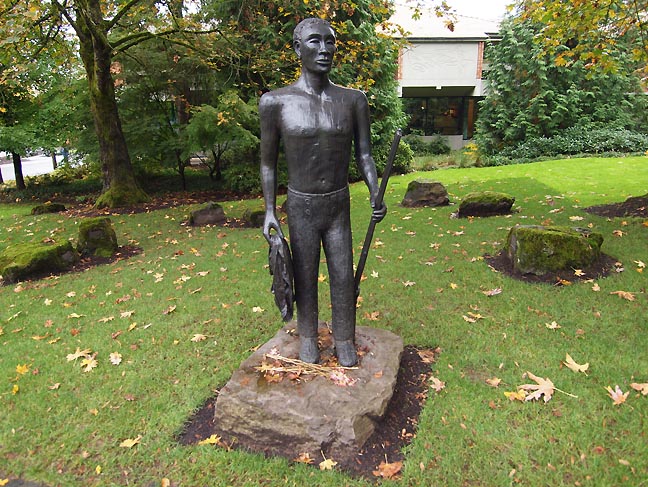 York: terra incognita (2010) photo Jeff Jahn Gabe: How did you end up at Lewis and Clark? Alison: Well there was this call for artists to do a... (more) Posted by Guest on November 30, 2010 at 15:51 | Comments (0) PermalinkFriday 11.05.10 Interlocution: an interview with Robert Storr 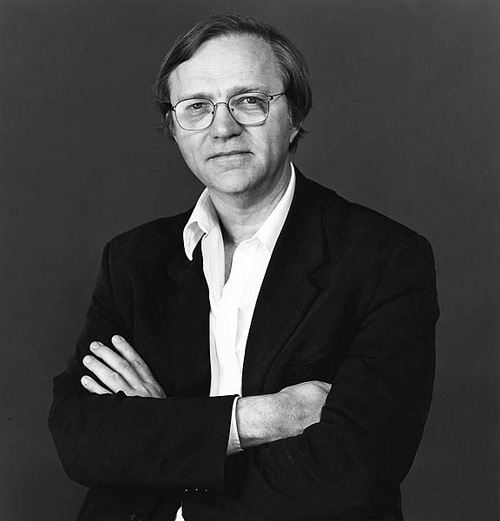 Robert Storr is one of today's most eminent curators as well as an artist and arguably a philosopher. Currently he is dean of the Yale School of Art. He was the artistic director of the 2007 Venice Biennale and Curator of the Department of Painting and Sculpture at MoMA for over a decade. I had the opportunity to listen to him lecture this April at the Donald Judd conference "Invenit non fecit." I spoke with him after the conference and he agreed to this interview. Q. Kirk Varnedoe has had a huge influence on many, how has his example influenced you and your work? A. Those most influenced by Kirk were his students, and beyond that people who worked under his direct supervision on the various exhibitions he organized. Frequently his assistants were... (more) Posted by Alex Rauch on November 05, 2010 at 12:11 | Comments (0) PermalinkWednesday 10.06.10 Interview with Mark Grotjahn 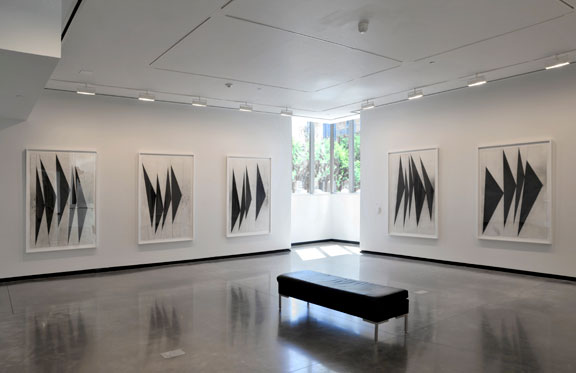 Installation of Untitled (Dancing Black Butterflies) at the Portland Art Museum Mark Grotjahn's Untitled (Dancing Black Butterflies) is currently on display at the Portland Art Museum until October 17, 2010. The exhibition includes a series of very large drawings with a remarkable tactile and material quality. Mr. Grotjhan is represented by the Gagosian Gallery in New York and Blum and Poe in Los Angeles. What was it like growing up in California? Did you go to LACMA in Los Angeles or SFMOMA in San Francisco? I was born in Pasadena, but we moved to the Bay Area when I was nine months old. In terms of museums that formulated, shaped or exposed me to art, it was SFMOMA. Having said that, I did see the first King Tut exhibition at LACMA in the '70s. Was there anything about growing up in the Bay Area that continues to influence your work today? I grew up in Marin, and I'm sure being in the redwoods and fresh air was probably good for me. I played baseball. Were there any artists who were influential to you growing up? What about California artists like Robert Irwin or John McLaughlin? In my late 20s, McLaughlin became important to me because he made rigorous abstractions and was the first California artist to break out and have an international career. But I read Kandinsky's Concerning the Spiritual In Art at age 15, I liked Paul Klee, and looked at my grandfather's books on Picasso. 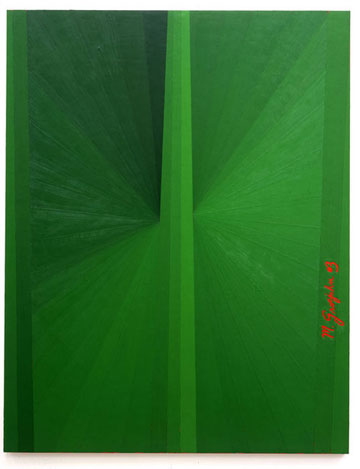 Mark Grotjahn, Untitled (Green Butterfly), 2003 Posted by Arcy Douglass on October 06, 2010 at 14:42 | Comments (0) PermalinkSunday 10.03.10 Interview with Charles Atlas 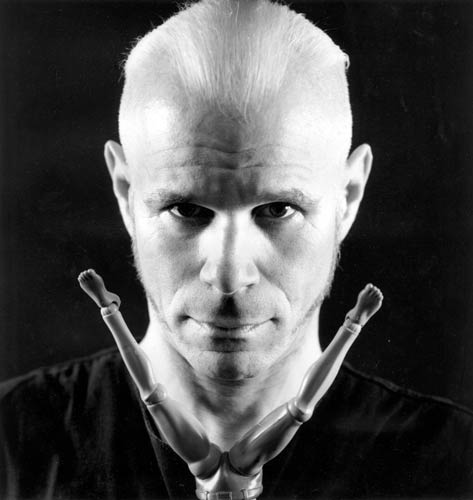 Charles Atlas (photo Josef Astor) GW: Lets start with a brief synopsis of your work. CA: I started out doing media dance combining dance with video or film. I worked with Merce Cunnigham for years. I have done feature length documentaries, multi media video installations, I've done live electronic performances and since 2003 I have been mainly focused on exploring different ways of using live video with performance or as performance or in installation. 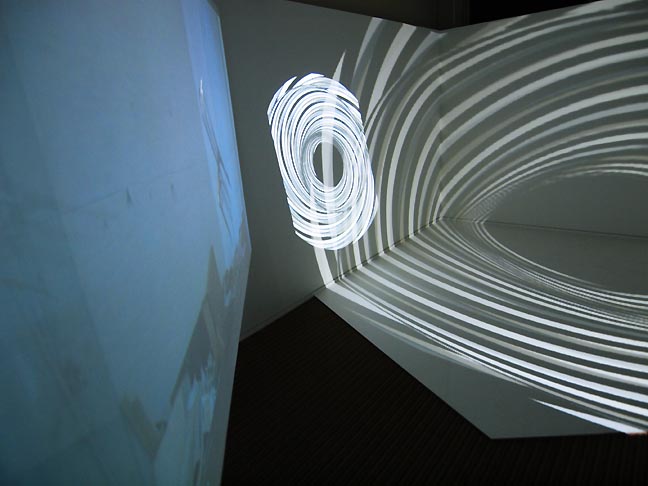
Charles Atlas Tornado Warning, TBA install (photo Jeff Jahn) GW: I would like to talk about Tornado Warning, the piece you have installed here at the ON SITE section of the TBA festival. CA: I had a retrospective and I realized that I wanted to show recent work. But all my recent work is live so there is nothing that exists. The last two pieces I have done have not been live - no live elements - but are influenced by the work I did in live video - so I could install something and then leave. Which was good. This piece - I made the first version of it in 2008 and I showed it in a gallery in London - It's called Tornado Warning. It was conceived as a two space piece, for two adjacent rooms... (more) Posted by Gary Wiseman on October 03, 2010 at 11:07 | Comments (0) PermalinkFriday 09.24.10 Interview with Jessica Jackson Hutchins 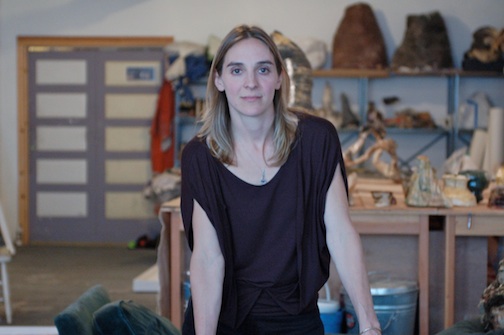 Jessica Jackson Hutchins in her Studio, Portland, 2010 Jessica Jackson Hutchins' work is a mined animal. Its disparate elements are found and forged from the mud of surrounding detritus and soliloquy. Her work culls from a playful existentialism; Kafka telling a rare joke. It is raw and irreverent and does not adhere to trend or pomp but instead concentrates on a vibrant subterranean mythology. Hutchins is the conduit through which these things are born. They are seismic musings of the absurd and profound, informed by both philosophy and what it is to walk down the street. They are totemic fragments of the efforts to describe pain and joy as lived. They are the spiritual mud and love pie made by the freest child, who dips her hair in ink and, with the swank of the mime and the prophet, draws with it. As I walk into her studio, she purposefully presses a turquoise magnetic letter "C" to the surface of one of her piano prints to be shipped to London the following day. . . .(more) Posted by Amy Bernstein on September 24, 2010 at 16:02 | Comments (3) PermalinkFriday 09.17.10 Interview with Nina Katchadourian 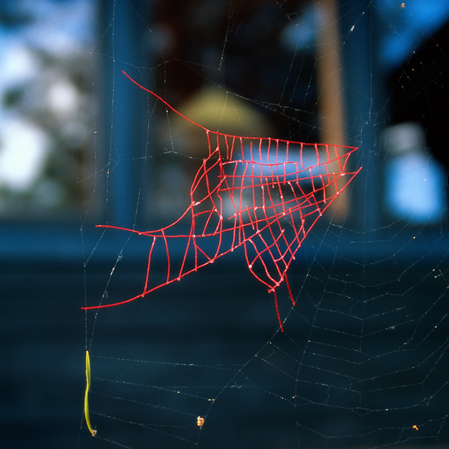
Mended Spiderweb #8 (Fish Patch), Cibachrome, 20 x 20 inches, 1998 GW: You spent a lot of time in Northern Europe it seems? NK: I have a mother who comes from Finland. So I have spent part of every summer of my life growing up there. It's a place that my family convenes in every year. It is a little island off the south coast. It's very, very far away mentally at least. from the rest of my life. Very different from Brooklyn where I live. This Island has, over the years, become a really important place for me to go to on occasion to make work. There are a lot of projects that...(more) Posted by Gary Wiseman on September 17, 2010 at 14:52 | Comments (0) PermalinkMonday 08.09.10 No Fake: An Interview with Ai Weiwei 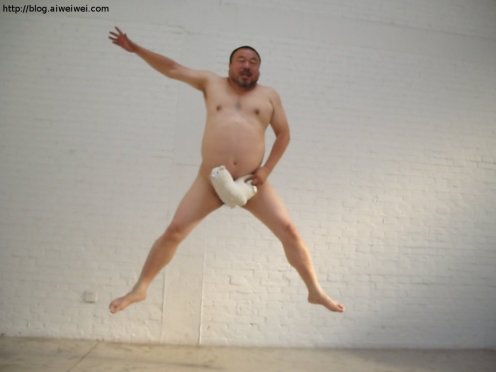 AR: Is the trend of distilling information down to 140 characters impairing society's ability to craft refined ideas? Ai: No refined ideas should be longer than 140 characters. AR: It is said that Duchamp lived as if he was dead. And that Warhol lived without individuality. How do you live? Ai: I live through awareness of my surroundings. ...(more) Posted by Alex Rauch on August 09, 2010 at 1:43 | Comments (2) PermalinkFriday 05.14.10 Interview with Adam Stennett for Disquieted I met Adam Stennett on a sunny, Saturday afternoon in May. Seated
on a park bench outside the Portland Art Museum, we discussed the development
of Stennett's working process, growing up in Oregon, and his life in Brooklyn
since 1994. Stennett's video piece, Mouse Swimming Overhead, is featured in the
PAM
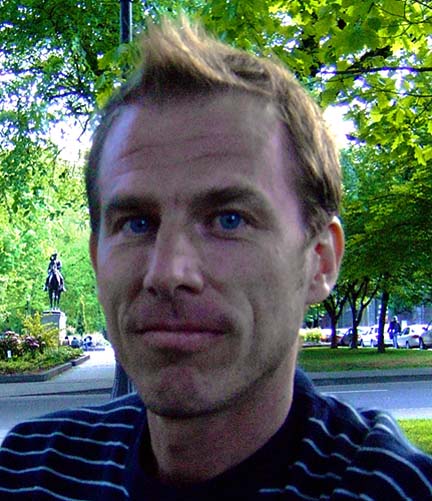
Disquieted exhibition. Disquieted closes Sunday May 16, 2010.
Adam Stennett in the South Park Blocks, Portland Or. "...you have to grab them from across the room and then punch them when you get them up close." - Adam Stennett Gary Wiseman: Let's begin with your impressions of the [Disquieted] exhibition. Adam Stennett: First of all when Bruce [Guenther] contacted me and said that he had a video of mine that he had borrowed from the collection of Ben And Aileen Krohn, and then he started telling me about the exhibition and who was going to be in it, you know, it was kind of like my dream team. So many artists whose work I really reacted to... (more) Posted by Gary Wiseman on May 14, 2010 at 15:32 | Comments (0) PermalinkTuesday 04.20.10 Hannah B. Higgins: An Interview of Primariness  Hannah Higgins Hannah B. Higgins is an Associate Professor at University of Illinois at Chicago. She is also the daughter of the Fluxus artists Alison Knowles and Dick Higgins and noted author of Fluxus Experience, and will be lecturing in tandem with Gestures of Resistance this Thursday at 6:30 pm at PNCA. > Is there a right or better way to experience "primary phenomena or ecological information?" The point of a primary information orientation is not that there is one way or a better way to access it. Walter Ong's writing on sense ratios and hierarchies demonstrates that the ranking of sensations is cultural (the primacy and isolation of vision, the low rank of smell, for instance, reflecting western values). So sensation is always filtered through values and value systems... (more) Posted by Alex Rauch on April 20, 2010 at 9:06 | Comments (0) PermalinkWednesday 03.17.10 Interview with Inigo Manglano-Ovalle part II Part
I of PORT's interview with Inigo Manglano-Ovalle discussed his his shows
Gravity Is a Force to be Reckoned With at Mass MOCA and Happiness
is a state of inertia
at Max Protetch Gallery, in continuation here the conversation digs deeper
into the artist's sources and process.
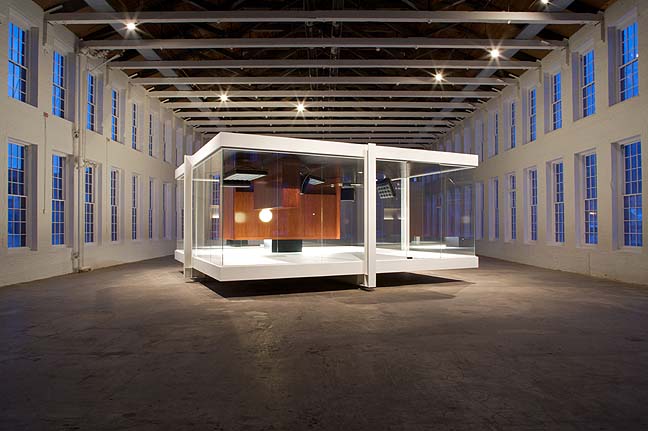 Gravity Is a Force to be Reckoned With, MASS MoCA Alex: Switching gears: How does Sergei Eisenstein's movie Glass House relate to Gravity Is a Force to be Reckoned With at Mass MOCA? Inigo: In the beginning I was interested in uncompleted projects. These uncompleted projects were also located historically in a similar sort of period - these were projects by individuals in a period of modernity. So I was interested in Eisenstein's Glass House because that was the title of what would be his first film in the US. Which was to be based on We (the novel by Zamyatin)... (more) Posted by Alex Rauch on March 17, 2010 at 6:46 | Comments (0) PermalinkTuesday 03.09.10 Interview with Bill Gilbert  Bill Gilbert Bill Gilbert has been the Lannan Foundation Chair in the Land Arts of the American West program at The University of New Mexico since 2000 and is the author of Land Arts of the American West. He took time to answer a few of PORT's questions on the eve of his talk for The Museum of Contemporary Craft this coming Wednesday at PNCA: Alex: Michael Heizer has indicated he'd like to fix Double Negative because it has deteriorated, isn't that the Land art equivalent of George Lucas redoing Star Wars? How do you feel about artists tinkering with their early earth art? Bill: Heizer has gone back and forth on this one. I really appreciate his ability to be inconsistent and answer depending on how he’s feeling or who his audience might be at any given time in the over the forty years it has been since the piece was completed. We artists all have complicated relationships with our work. So, I understand the... (more) Posted by Alex Rauch on March 09, 2010 at 7:01 | Comments (0) PermalinkSaturday 02.27.10 Interview with Inigo Manglano-Ovalle Part I  Le Baiser - The Kiss (1999) Ovalle (pictured) Inigo Manglano-Ovalle was born in Madrid, Spain in 1961, lives and works in Chicago, Illinois. He was educated at Williams College and The School of the Art Institute of Chicago, and he has exhibited his works widely since his first solo exhibition in 1991. Ovalle teaches at the University of Illinois and has been a MacArthur fellow since 2001. Recently I took a trip to the East Coast to see Manglano-Ovalle's two shows Gravity is a Force to be Reckoned with and Happiness is a State of Inertia(Max Protetch Gallery). This is the conversation we had about his work in the Max Protetch Gallery on February 5th before the opening. 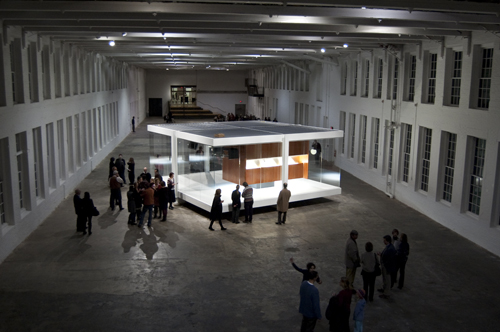 Gravity Is a Force to be Reckoned With at Mass MOCA (photo Dylan Lathrop) ...(more) Posted by Alex Rauch on February 27, 2010 at 17:44 | Comments (0) PermalinkFriday 11.13.09 East/West interview with galleryHomeland by Gary Wiseman 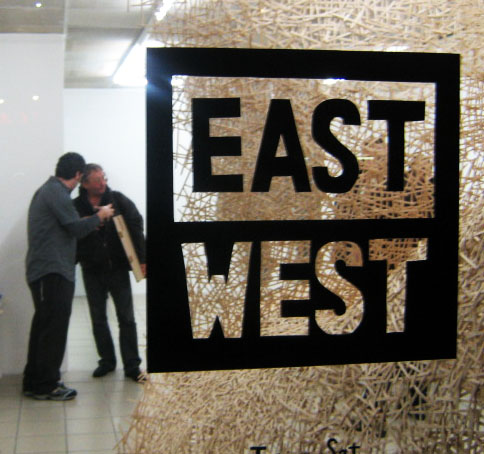 East/West storefront in Berlin, Mitte district (all photos: Jackie Friscia) Gary Wiseman - East/West is an innovative project. It is very compelling to me. The first time I heard Paul mention something about it was two years ago. Paul Middendorf - That's about right GW - Tell me about the development of the project, who you're working with, who is involved... PM - Sure. I guess the earliest incarnation of EAST/WEST happened in 2007 when galleryHOMELAND went, representing Portland, to the Art Basel Fair, in Switzerland. We did a project called Attache' Case where we brought 15 artists [work] in this case that we showed at the various fairs like Scope and we would bring it outside Art Basel, we went to Munster, Germany to see the the sculptural fair that happens every ten years, went to Documenta, presented at some places there. Through these travels we were forming many relationships. I was also, for part of the time, traveling with Leah Stuhltrager, one of the main directors of Dam, Stuhltrager. GW - The gallery you work with in Brooklyn? PM - Yah. So, basically in Basel, Switzerland we had met a lot of European [specifically] Berlin gallerists. We were fascinated by a lot of the similarities that we shared in projects and artist relations. So...(more) Posted by Gary Wiseman on November 13, 2009 at 14:27 | Comments (0) PermalinkFriday 10.30.09 An interview with Tom Cramer 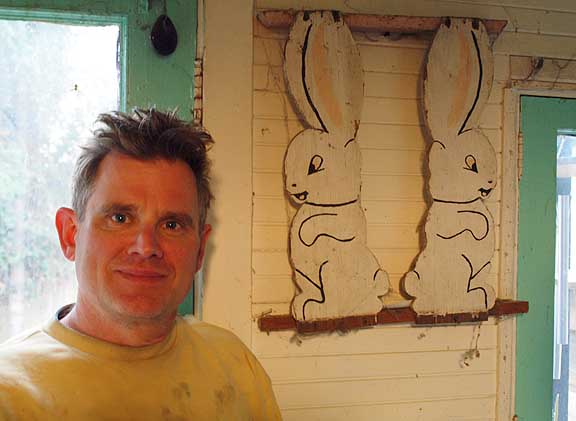 Tom Cramer, September 2009 Somewhat predictably, Tom Cramer's most recent show is his best to date (and it ends October 31st). It is an inventive mixture of cosmic energy, German Romanticism and hard nosed discipline, which helps make his work both unique and exquisite. In fact, for at least the last decade Tom Cramer has been Portland's best selling artist and what's more with his art cars, murals and totem statuary, no artist is more ubiquitous. Perhaps no artist represents Portland's character more, being at once both hermetic and brash, Cramer embraces the contradictions of making "earthier" art that is anything if not transcendent. He's also a bridge between the Portland artists of the 60's and the latest tidal wave young émigrés and was way overdue for an interview with PORT. We interviewed him in his North Portland home and here's what Portland's all but official artist laureate had to say. 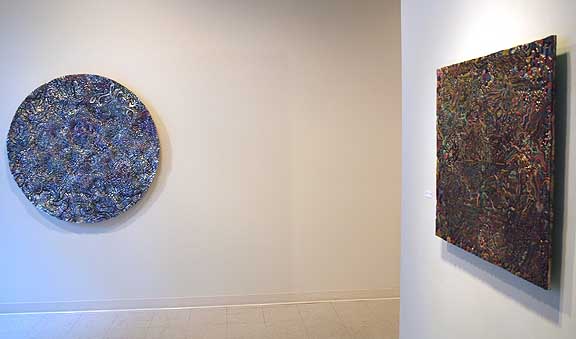 ...(more) Posted by Jeff Jahn on October 30, 2009 at 15:51 | Comments (1) PermalinkThursday 10.08.09 Anne Wilson: A Portable Interview  Anne Wilson's Portable City 2008 What do you learn from your students - and how does/has that impacted your own practice? I have been thinking a lot about this question. Before I took the recent rotation as department chair of Fiber and Material Studies at SAIC more... Posted by Alex Rauch on October 08, 2009 at 14:21 | Comments (0) PermalinkTuesday 09.08.09 Interview with Gregory Green An interview with Gregory Green in his installation on Sunday. WCBS Radio Caroline The voice of the New Free State of Caroline 96.7fm Portland Oregon. A .5 watt "pirate" radio station for the period of 09/06/09 -12/13/09 stationed in the Hoffman Gallery at Lewis and Clark College. Posted by Alex Rauch on September 08, 2009 at 9:08 | Comments (0) PermalinkFriday 08.28.09 Mel Katz has the last laugh  Mel Katz at his March 2009 show Of all of Portland's many longstanding art world figures, none commands the respect of younger generations more than Mel Katz. He's an impressive sculptor who hasn't grown so comfortable with his reputation that he's become stagnant. Though I've watched him for a mere decade, Katz appears to be the opposite… he seems to get more curious and take more risks as the years go by. What's more, no other local artist deserves a serious retrospective than Mel Katz (though one wonders what institution could do it justice?).  Mary Randlett, Mel Katz, (Summer, 1972) Katz was also a driving institutional force for the PCVA and PSU's art program and during the 70's was somewhat single-handedly responsible for Portland not being isolated from the art world and contributing to the careers of major artists. In fact, the Portland Center for the Visual Arts was ahead of the time doing shows with Bruce Nauman, Richard Serra, Carl Andre, Robert Irwin, Chris Burden and Donald Judd etc. He's the dean of artist driven initiative and intervention in Portland and he has more in common with the constant waves of new artists than CS Price... (more) Posted by Jeff Jahn on August 28, 2009 at 16:37 | Comments (3) PermalinkFriday 05.15.09 East Meets West: An Interview with Sanford Biggers  Sanford Biggers, Blossom, 2007 Sanford Biggers is a New York artist whose 2007 work Blossom will be at the APEX Gallery at the Portland Art Museum starting on May 16, 2009. Bigger's work is a fusion of east meets wests, Buddhism meets Hip Hop, that takes places from the train yards of Los Angeles, Zen Temples of Japan to the galleries of New York. I read that you grew up in South Central Los Angeles. What was that like? I grew in the early seventies in Los Angeles. I was influenced largely by the artwork that my parents had in their home which were prints by important American artists like Elizabeth Catlett, Charles White, John Biggers and Ernie Barnes. It was largely figurative and Afro-centric images which were influential for me as well the graffiti that I would see on the streets of Los Angeles and in the train yards. It seems like your art experiences were coming out of your home rather than say being influenced by the Los Angeles County Museum of Art (LACMA) or the Pasadena Art Museum. Is that true? As a kid, I mainly only went to museums on field trips, so my earliest experiences with art were in my parent's and their friends' homes. I did, however, spend time as a teenager at LACMA and California African American Museum where I took art classes on weekends. You mentioned that you remember being exposed to graffiti while you were growing up in Los Angeles and it would go on to influence your later work. What was your relationship to graffiti at the time? I spent a lot of my teenage years with a graffiti crew going out and bombing (spray-painting), various walls and train yards with graf murals. That was a big part of my early years as a B-boy and I still reflect on some of those forms that I was interested in and I try to bring them back into my work. A few years ago, I did a few different types of sand paintings, one of which was a graffiti version of the Sanskrit word/sound, "OM". It was made of colored sand, poured directly on the floor. A technique that was not too dissimilar from that of Tibetan monks. More... 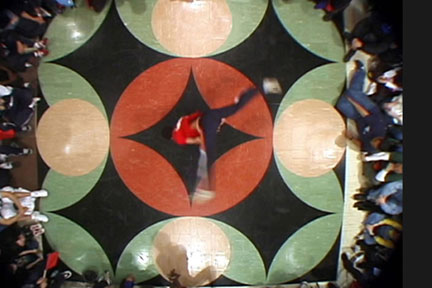 Sanford Biggers, Mandala of the B-Bodhisattva II, 2000 Posted by Arcy Douglass on May 15, 2009 at 22:00 | Comments (0) PermalinkSaturday 05.02.09 What's next for Mickalene Thomas 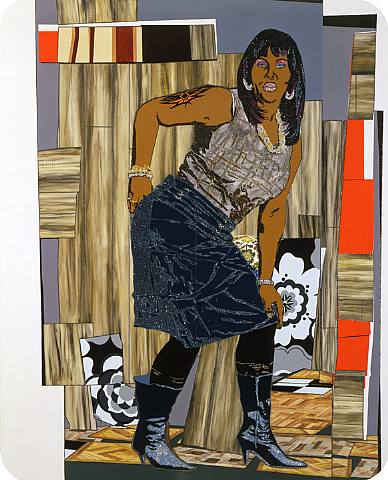
All she wants to do is dance (Fran) 2009 courtesy Lehman Maupin Mickalene Thomas is currently the toast of New York for her rowdy painted and rhinestone riots of patterns and personality, finishing up a successful solo show at Lehman Maupin. The work has consistently struck me as some of the boldest being done today. She's also a former Portland-based model who left to study art at Pratt then Yale (she discovered her interest in art at PSU). She still visits Portland frequently and we have a lot of mutual friends... but for a change PORT caught up with her in her Brooklyn studio to talk about her first New York solo show, her work and what is next. Jeff: Forgive me but I have to ask, why rhinestones? Mickalene: At the beginning I didn't know why. One, I always worked in different materials like sequins and glitter, all of these untraditional craft materials that I seemed to gravitate towards for my process. Once I started using... (more) Posted by Jeff Jahn on May 02, 2009 at 9:54 | Comments (0) PermalinkFriday 04.24.09 Interview with Okwui Enwezor 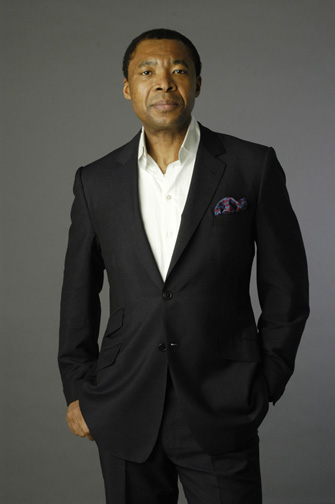 Portrait of Okwui Enwezor by Jeff Weiss, Courtesy Bard College I had the lovely opportunity to speak with Okwui Enwezor this month as he was in town to speak at the annualFATE conference that took place the weekend of April 3rd. Enwezor is currently the Dean of Academic Affairs at the San Francisco Art Institute and has curated a variety of renowned exhibitions around the world. He took some time early one morning to discuss his views on subjects ranging from the notion of excellence in education to his take on the recent election of Barack Obama as president. . . (more) Posted by Amy Bernstein on April 24, 2009 at 0:16 | Comments (0) PermalinkTuesday 02.17.09 An interview with Glenn Adamson 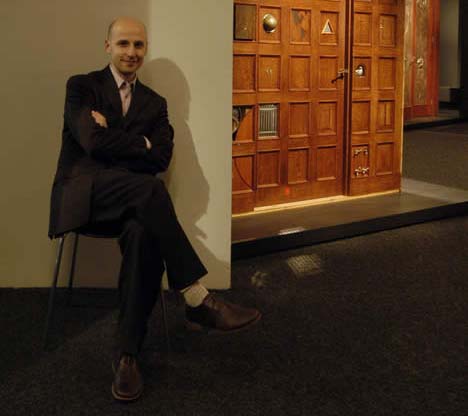
Leading craft writer, researcher, educator and theorist Glenn Adamson is the Author of Thinking Through Craft an introduction for artists and craftspeople dealing with the common perception of craft. He will be giving a lecture entitled Craft in the 21st Century: Directions and Displacements Saturday, Feb. 21 for more information check out the Museum of Contemporary Craft's events calendar. (more... PORT's interview with Adamson after the jump) Posted by Alex Rauch on February 17, 2009 at 6:00 | Comments (2) PermalinkSaturday 02.14.09 Interview with Laura Fritz by MK Guth 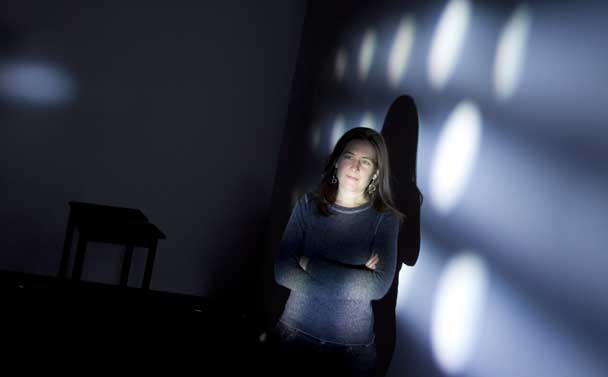 Laura Fritz at NAAU, photo Jim Lommason MK Guth: I wanted to start with the basics like, what is your background? What brought you to art? Where did you go to school? Where was your area of focus and does that connect to how you are making work now? Laura Fritz: Well, I grew up in the Chicago area and I started out being really interested in lights in darkened rooms. They fascinated me. Sometime between Preschool and Kindergarten age there was this one grocery store that had an aisle where the lights weren't working. It was the peanut butter and jelly aisle and all the jars were just glowing because the aisle next to them allowed light to come through the side. I would just run up and down the aisle because I thought it was so interesting... (more) Posted by Guest on February 14, 2009 at 18:00 | Comments (0) PermalinkSunday 12.14.08 Jonathan Lasker at PAM 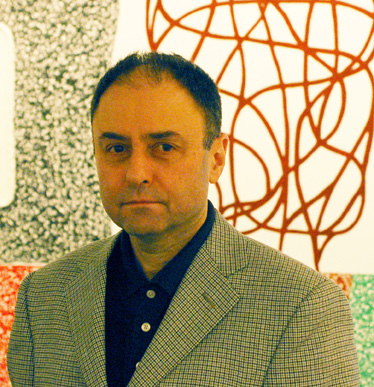 Jonathan Lasker at PAM Jonathan Lasker is a painter's painter. His work has answered the call to move and change and be something relevant during an era when the medium of paint was pronounced dead. Lasker's oeuvre speaks to the notion of possibility and invention within the ideas of material and symbol while speaking to the experience of this time as well. Over the last thirty years, Lasker has distilled this language into something almost audible, wrought with the eloquence of a haiku. I had the opportunity to speak candidly with Lasker about his life's work at the Portland Art Museum, where his work will be on view until January eleventh. PORT: Do you see a great disparity between the east and west coasts? . . .(more) Posted by Amy Bernstein on December 14, 2008 at 20:46 | Comments (1) PermalinkWednesday 11.05.08 Interview with Storm Tharp 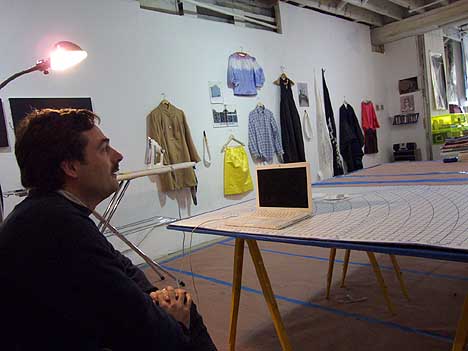 Storm Tharp in the studio, October 2008 (photo Jeff Jahn) "We Appeal to Heaven," Tharp's last solo offering in Portland, in 2007, caught the artist at his most consistent: a gallery of uniformly sized ink portraits and some peripheral text pieces. It was a successful cementing of his promise, and many speculated that he'd found 'his thing.' At a solo show that closed last month at Galerie Bertrand & Gruner in Switzerland, as well as a two-person show at Nicole Klagsbrun in New York this month, Tharp has continued to develop and display this tangent of his work. But in "Arm & Arm," Tharp ventures into other realms, exploring a newly intimate and familial conceptual terrain...(more) Posted by Ryan Pierce on November 05, 2008 at 9:39 | Comments (2) PermalinkFriday 10.17.08 Vito Acconci at the Nevada Art Museum's Art + Environment Conference 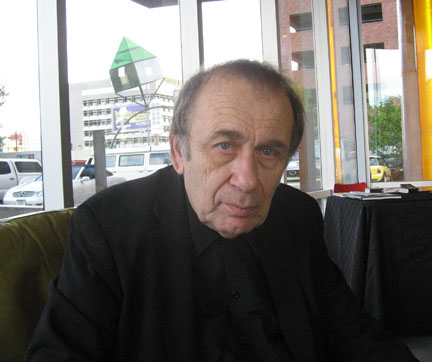 Vito Acconci at the Nevada Art Museum's Art + Environment Conference, 2008 I recently had the opportunity to attend the Art + Environment Conference at the Nevada Art Museum, October 2-4, 2008. Guided by the comments of the Lead Moderator William L. Fox, who is also the Lead Strategist for the Art + Environment Intiative, it was three days of excellent and thought provoking presentations from artists, writers, curators and even a biologist. The intention of the conference had been to bring to together as many ideas and perspectives on the environment as possible to see how ideas from different disciplines might cross polinate. It was under these circumstances that I had the opportuntiy to speak to Mr. Acconci. The interview ranged from Marina Abramovic's recreations of Acconci's performance art and that of others from the 1970s and Acconci's perspective on his current architectural practice. In your early work, how did you know that using the experience of your body would be enough to make art? You understood early on that you did not necessarily have to create a painting or a sculpture but that your body and your experience could be the raw material for a new kind of art experience. Because of the time. It was the late '60s and early '70s and the common language of the time was one of finding oneself, as if the self was something to contemplate. It was as if, at the time, that the self was a kind of precious jewel to concentrate on. Also it was the time of face-to-face encounters and encounter groups with an emphasis on person-to-person relationships. There were a lot of books at the time about non-verbal language, you know, how do people sit facing each other or whatever. It was a time when a lot of authority figures were being toppled, demonstrations against the Vietnam War, which was probably the most important thing about the time. It was also the time when the first Feminist writings were beginning to emerge. It was a time when, I do not think that I could say all of us, but some of us started to think that there was something wrong about art. There is something wrong about museums. We would ask questions like why do museums have no windows or few windows? Is art as fragile as all of that? Probably the answer is yes but, in other words, a lot of us wanted to see if art could be a kind of encounter. Can art be a kind of interaction? I am still not sure, but it was something that we wanted to explore. (More...) 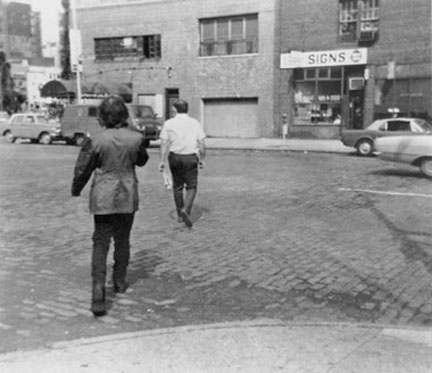 Vito Acconci Follow Piece, 1969 Photograph (c)Vito Acconci 2008 Posted by Arcy Douglass on October 17, 2008 at 12:59 | Comments (1) PermalinkTuesday 10.14.08 Interview with Garth Clark (exclusive) 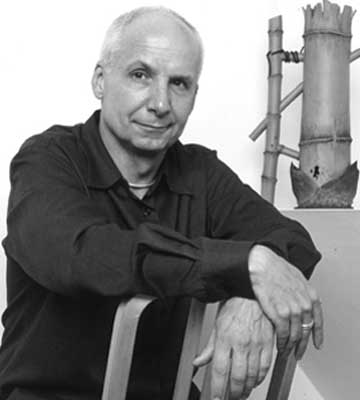 Garth Clark Alex Rauch: You have been called a visionary. You are a gallery owner, curator, writer, historian and one of craft's preeminent intellectuals, associated with everyone from; Peter Voulkos, Anthony Caro, the Natzlers and George Ohr to Ken Price. And this Thursday you will be giving a lecture entitled How Envy Killed the Crafts Movement: An Autopsy in Two Parts. I guess a good place to start is how you would define the craft movement? 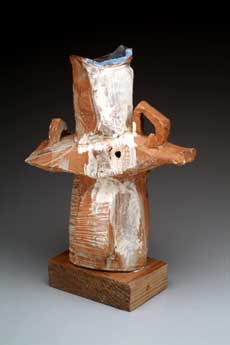 Peter Voulkos, Untitled, c. 1960; ceramic; 13.5 x 8 x 18 inches; Collection Museum of Contemporary Craft, Gift of the Margaret Murray Gordon Estate; 2004.10.03 Garth Clark: This you know has been a bit of a problem. The crafts themselves have really defined themselves as a kind of purgatory...(more) Posted by Alex Rauch on October 14, 2008 at 1:00 | Comments (0) PermalinkTuesday 10.07.08 Use and Space. An Interview with Brad Cloepfil, Part II Part II of PORT's conversation with architect Brad Cloepfil focuses on the spaces
he creates for use by art and people. Part
I dealt with Cloepfil's many artist influences. Part II picks up right where
it left off, continuing our single marathon discussion of aesthetics, intent and buildings with Portland's most noted architect.
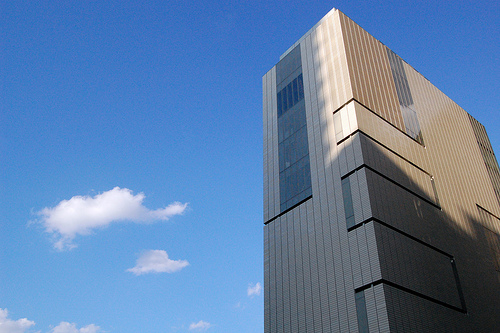 Cloepfil's Museum of Arts and Design (photo Michael Oman Reagan) Arcy: Now that your generation is in charge you can see where ideas and institutions can lead you astray or have deep value… having grown up during Vietnam you can see both sides of the equation. What are the implications of the solace of organization and the danger of thinking as a culture rather than as an individual? Brad: Well I wonder if seeing those images of bamboo being mowed down by machine guns night after night didn't produce a quest for more connection. I mean there was a period of art and a period of architecture when they kind of serialized culture; where the LA school of architects turned everything into collage, where the attitude was, "the world is chaos, so we will make architecture chaos." It's a kind of caricature almost, or can you create a counter voice and create something that is still? I definitely think I'm in the counterforce camp...(more) Posted by Jeff Jahn on October 07, 2008 at 0:22 | Comments (0) PermalinkSaturday 10.04.08 Fritz Haeg Interview at Reed College 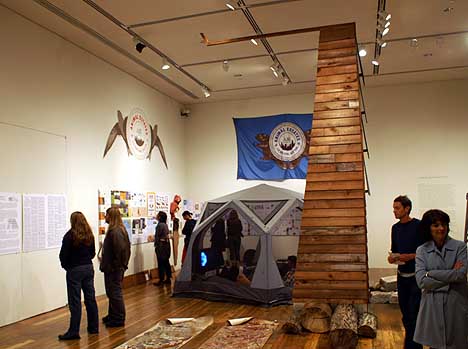 Fritz Haeg's Animal Estates @ Reed's Cooley gallery Fritz Haeg is one of those people for whom definitions like; architect, artist, curator and activist, miss the broader picture of his efforts. For example, even though he was part of the 2008 Whitney Biennial and will be addressing the Frieze art fair this year, he could care less about conquering the art world. Instead, he wants to change the way we see and engage the world and his contribution to the Suddenly: Where We Live Now show at Reed's Cooley Gallery is both a resource and a prompt for engagement. In this show about understanding our shared environment and context Fritz's Animal Estates projects draw attention to many the wild animals that also live in Portland. The show end's tomorrow at 6:00 (with Fritz in attendance) so get on down to see this show while you still can. Jeff: Tell me about the Animal Estates project at the Cooley gallery's Suddenly: where we live now? Fritz: On the perimeter there is this Animal Estates repository or archive where each city adds material and it keeps growing from city to city. Each place is represented in very... (more) Posted by Jeff Jahn on October 04, 2008 at 16:31 | Comments (1) PermalinkMonday 08.11.08 Art and Architecture: An Interview with Brad Cloepfil Part I 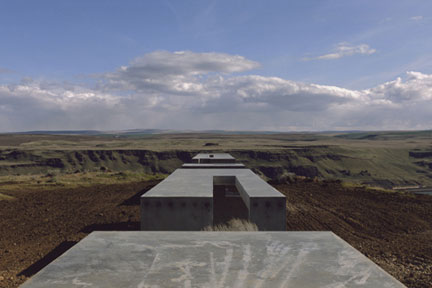 Allied Works Architecture Maryhill Overlook, 1999 Photo by Sally Schoolmaster Brad Cloepfil is the principal of Allied Works Architecture in Portland, Oregon. Allied Works is a nationally recognized architecture firm that has recently completed projects like the extension to the Seattle Art Museum, the Contemporary Art Museum of St. Louis and is currently finishing the Museum of Art & Design at 2 Columbus Circle in New York. PORT recently sat down with him to ask about the impact artists have had on his work. How did your early experience with art feedback into your own creative process? When I was younger, I tended to be influenced by the raw experience of the work itself. At first, I wasn't even aware of who created a work, whether it was Richard Serra or Robert Irwin, it was the experience of the work itself that was important. The experience makes you ask yourself about the spatial quality of that type of work and about the ideas that those artists are exploring. It just resonates with you. I wasn't seeing anything comparable in buildings. It just seems like those guys understood more about the intentions of the 19th and 20th century architecture than the architects did. They had clarity of thought and a practice that was built on the exploration of material that became very important to me. The singular act of focus to create a work of art was really impressive. I saw Richard Serra's Circuit at MoMA and it is just four pieces of steel propped up in the corners of the room. The physical presence and the mass of the steel and its ability to radiate space into the small gallery was for me a very architectural experience that I could relate to much easier than the so-called "architecture" that was being produced at that time. The experience is about the material and the way that the material is made. It was also easier to learn from the artists because their work is so pure. By that I mean, the work that I was interested in was focused on the exploration of only one or two ideas. 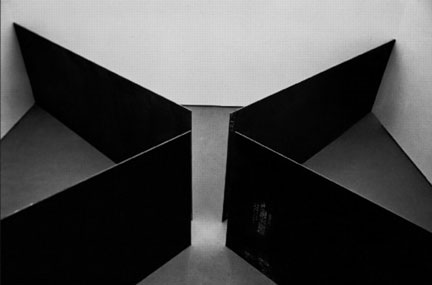 Richard Serra Circuit II, 1972-86 Hot Rolled-Steel. Four Plates Each: 10' x 20' x 1" Posted by Arcy Douglass on August 11, 2008 at 20:09 | Comments (1) PermalinkTuesday 06.10.08 I will see where it takes me from here: A conversation with Ed Ruscha 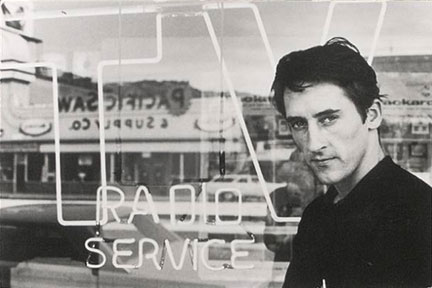 A portrait of Ed Ruscha by Dennis Hopper from 1964 Ed Ruscha is one of America's greatest painters. During the last forty years of producing an amazing body of work, he is best known for his recontextualizations of words and environments. These often jarring juxtapositions have helped us to reexamine the world we live in. An exhibtion of Ed Ruscha's work will be at the Portland Art Museum from June 14 to September 21, 2008. I read that you studied with Robert Irwin at the Chouinard Art Institute. What was he like as a teacher? That's right. Well, he was very rigorous and interesting. He was a task master. He taught a watercolor class and he went through elaborate steps to teach every student how to prepare the paper for the watercolors. You would have to prepare this paper by wetting and stretching it and the paper would be taut like the head of a drum. Irwin was a committed abstract painter and he was a vital person in my estimation during my early years. It just went on from there. He was one of several people that I studied under. Although I got quite a bit, not just from the teachers, but also from the students themselves, just being in that atmosphere. At one point you mentioned that in the sixties, you were the biggest collector of your own work. What was that like? There is more than a shred of truth there. It was about 1961 when I really got swinging into my own art. I had it for a few years before I exhibited it, and I didn't sell too much of my early work. Even during exhibits I would only sell one or two things. So I held on to quite a bit of my own work during the early years. (More...) Posted by Arcy Douglass on June 10, 2008 at 1:15 | Comments (2) PermalinkFriday 06.06.08 Justine Kurland interviewed in Portland 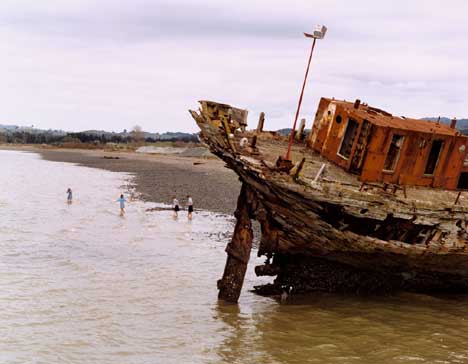 Ghost Ship, 2001 Satin finish UV laminated C-print 30 by 40 in. 76.2 by 101.6 cm. All images Courtesy Mitchell-Innes & Nash, New York. Photographer Justine Kurland has spent the past decade staking her claim in the vast territory of American myth. Her color landscapes, most often stages and backdrops for figurative tableaus, are portals to an adjacent world, a Siamese twin world comprised of unseen moments from this one. Kurland earned early accolades for her neo-romantic scenes of teenage girls adrift in the overlooked spaces of suburban wildlands. Tough, tender and imbued with the awkward grace of those years... (more) Posted by Ryan Pierce on June 06, 2008 at 11:28 | Comments (0) PermalinkFriday 05.16.08 CA @ PCVA "There is no true way except for that which is true for oneself. My way does not invalidate the way of anyone else."
-Carl Andre in an interview with Paul Sutinen in 1980 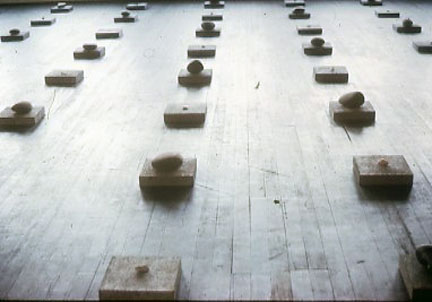 Carl Andre 144 Blocks & Stones, 1973 (Detail) Concrete blocks and found and store bought rocks and minerals Installed at the Portland Center for Visual Arts in March 1973 Image courtesy the PCVA Archive at the Portland Art Museum (c) Carl Andre 2008 Here are ten questions that I asked Carl Andre about his installation 144 Blocks & Stones at the Portland Center for Visual Arts, March-February 1973. In the early correspondence for the exhibition at the PCVA, the installation was described as a "scavenger" show. When did you decide to use river stones and concrete blocks for the installation? When I arrived in Portland. When you were looking for river stones, what qualities were you looking for? The found river stones were complemented by specific geological samples purchased from stores. How did you decide which samples to buy? Do you remember where you found the river stones? I selected ones that interested me. I found them in the local river. 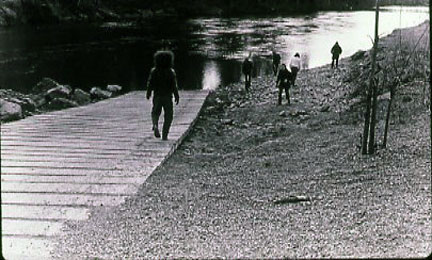 Looking for stones by a local river for the installation at PCVA Image courtesy the PCVA Archive at the Portland Art Museum (more) Posted by Arcy Douglass on May 16, 2008 at 0:22 | Comments (3) PermalinkMonday 03.31.08 Between Heaven and Earth: The Work of James Lavadour 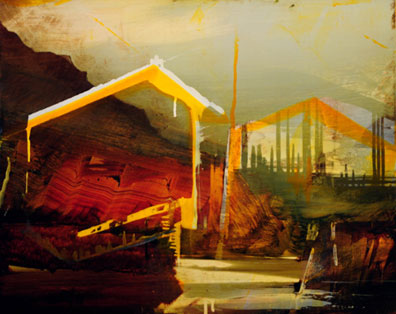 James Lavadour Star House, 2008 oil on panel 24" x 30 "My main interest has always been about the properties of paint, what paint does. One of the things that paint does is that it is organic and does the same sort of things that dirt does, anything in the natural world does. It has the same processes: erosion, sedimentation, flow... I saw in that microcosm of a landscape. I saw the same processes in watercolor settling in on a piece of paper as rivers and mountains. That was the first principle that struck me early on and I realized that ever since I was a child I was fascinated by those particular processes. I realized that I had two basic things that I work with in my paintings: the first is organic flow which is the landscape. The second was an architectural grid or abstraction which is based on the human perception or response to the natural world. Those two ideas have always been my right hand and my left hand. They were polar opposites of one another. I used to do either abstracts or landscapes. At this point, they intersected in this collision. After that I had no idea what was going to happen then. The abstracts became more like landscapes and the landscape became more like architectural structures with a cellular structure that had spaces within spaces within spaces. When I experienced that microcosm of the cosmos, everything else just fell away. (More) Posted by Arcy Douglass on March 31, 2008 at 20:29 | Comments (1) PermalinkThursday 01.31.08 Portland Curatorial Roundup 2008 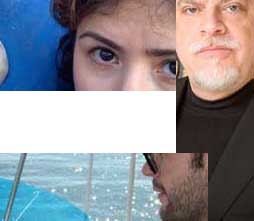 Whether you are an artist or an art lover, curators are the people in your community that you need to know and the job involves a lot more than simply selecting who gets to show in a space. Last year's roundup was hugely popular and this 2008 roundup will take things even farther. It is still by no means comprehensive as Portland has seen an explosion in interesting alternative spaces. It goes without saying that there is a whole new crew in Portland these days. Participants for 2008 are: Bruce Guenther, Linda Tesner, Josh Smith, Nathan Gibson, Patrick Rock, Namita Wiggers, Kristan Kennedy, TJ Norris, Paul Middendorf, myself, Stephanie Snyder, and Damien Gilley... (more) Posted by Jeff Jahn on January 31, 2008 at 2:15 | Comments (2) PermalinkTuesday 01.08.08 Interview with MK Guth 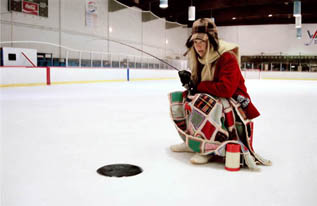 Portrait of MK Guth by Marne Lucas "I have no life," confesses MK Guth with a chuckle. "But that's off the record." What the overachieving Portland artist means, of course, is that outside of an accelerating art practice that has her touring a new project across the nation-state-hopping her way to the Whitney Biennial-and heading the new Masters in Visual Studies program at PNCA, she doesn't have a lot of time for hobbies. But Guth seems to be taking both her hectic schedule and success in stride. The Wisconsin transplant, who has lived and or shown in Portland for...(more) Posted by Ryan Pierce on January 08, 2008 at 9:51 | Comments (4) PermalinkThursday 10.04.07 An Afternoon with Mary Henry 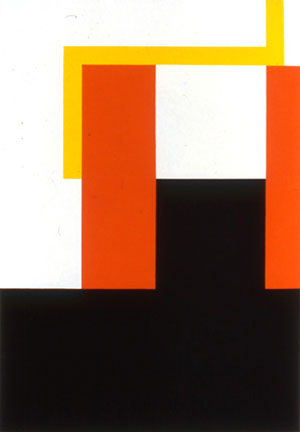
Mary Henry- Metaphor, Acrylic on canvas 1995. Image courtesy of PDX Contemporary Art Portland, Oregon I wasn't sure what I was expecting as I drove up to Seattle with my wife on an early on a Saturday morning in June. I knew that I was traveling to meet with one of the great painters of the Northwest, Mary Henry. I was familiar with her paintings with their beautiful colors and meticulous craft. The paintings have such a remarkable clarity that they ring with a distinctive tone, not unlike hitting a bell at a Japanese temple. Perfect, complete and clear. More... Posted by Arcy Douglass on October 04, 2007 at 12:10 | Comments (0) PermalinkWednesday 04.11.07 Printmaking, Pollock and Poetics: A Conversation With Terry Winters 
Vermilion 2005 A Conversation With Terry Winters: "I hope to be clear in describing the process, but the experience of making the painting isn't linear. The best things tend to come by surprise or emerge from the circumstances"...(more) Posted by Arcy Douglass on April 11, 2007 at 11:52 | Comments (1) PermalinkTuesday 03.20.07 An Interview with Elliott Erwitt  Elliott Erwitt Elliott Erwitt is one of the most exceptional and prolific photographers in the field today. Born in 1928, he's been photographing steadily (and indulging in his hobby on the side) for over half a century. Erwitt's Leica has captured iconic figures from Che Guevara to Marilyn Monroe, as well as countless slices of daily life, hundreds (perhaps thousands) of dogs, and the ever-evolving social landscape of America, Europe and points beyond. A selection of images culled from his latest book, entitled Personal Best, is on view at the Portland Art Museum through April 29th. Mr. Erwitt recently spent a few days in Portland in order to deliver a lecture at PAM, and kindly shared a little of his time for the following interview.....................(more) Posted by Jessica Bromer on March 20, 2007 at 0:50 | Comments (10) PermalinkWednesday 01.03.07 Port's Curatorial Roundup 2007 Curators are the people you need to know in the art world and Portland is full of them. To begin 2007 we thought we'd poll a few of them and learn a little more about how they see their roles. Now prepare yourselves, this is one long article. Also, as expected the term curator was incredibly loaded. Some reserve the term only for nonprofit work, others admitted to acting in a curatorial role without actually claiming to be curators. For some being a curator seemed to be like breathing. To be sure there are as many types of curators as there are curatorial roles. From old pro's to rookies, these 13 are only a sampling of the curatorial voices in town:
 Terri Hopkins by Joe Macca (detail) Terri Hopkins: Director & Curator of the Art Gym, Marylhurst University How did you get into curating? It was a circuitous process of career sampling and elimination. I prepared for a career teaching art history, which ............(much more) Posted by Jeff Jahn on January 03, 2007 at 23:23 | Comments (4) PermalinkWednesday 12.27.06 An Interview with Marne Lucas  Marne Lucas, MLSP: Alphorny, archival pigment print 2006 Artist Marne Lucas and I took brief respites from our densely packed holiday schedules to sit down for an electronic bi-coastal conversation about her current exhibition, Sitting City: Portland Artist Portraits. The images of local artists created for Sitting City were partially funded by a RACC (Regional Arts and Culture Council) project grant, and represent a small cross-section of Lucas's ongoing project of capturing the appearance and essence of her artistic peers.....................(more) Posted by Jessica Bromer on December 27, 2006 at 9:11 | Comments (7) PermalinkTuesday 06.27.06 Interview With Matthew Day Jackson  Jackson's Viking Burial Ship at PS.1's Greater New York show (2005) Isaac D. Peterson Matt D. Jackson (P.I.C.A. artist in residence) IDP: I was thinking about what we discussed earlier about the new structure of information, and I noticed in one of your sculptures you made this connection between Punk Rock and a Viking ship. This is one of those associations that couldn't normally exist in a linear structure but clearly Punk Rock culture may have some Viking undertones. MDJ: That piece was really a suicide piece. IDP: It was a funeral pyre, right? MDJ: Well, it wasn't historically accurate, but I'm not even concerned with that, I'm concerned with maybe the Hollywood representation of Vikings. Basically I had come to the point where I realized I was fulfilling someone else's legacy of making art. I was operating within this formal strategy that was completely developed by my predecessors. You know from Modrian to Reinhardt to Philip Guston to Jonathan Lasker. Basically what they were making were super-narrative abstract structures. I realized that what I was doing was something that was not entirely a part of my generation, and that my ideas and creativity were constantly struggling against this. I wanted to put it all to rest, so I started making this funeral vessel for my own ideas and it took the form of this very heroic funeral practice. Of course the whole idea is pure Hollywood myth, there would be no artifacts of these ships if they had all been set on fire and pushed out to sea. I would say that that definitely didn't happen, but I wasn't as concerned with that. I was more concerned with heroic death and how it was represented in the media. I wanted to focus on death in relationship to all of this iconography. The sail refers exactly to a pattern from a specific Mondrian painting, and that leads in to the idea that these modern icons have narrative potential. IDP: That seems pretty radical to think of Mondrian as having narrative potential. MDJ: But it is! We've gone there! It's on clothing, it's on swatches, it's on furniture! IDP: Regardless of what Mondrian intended, the work has acquired a narrative. MDJ: Yes, and that's the world that we live in. I think of the Brancusi heads I'm making now, they are stacked up like cannonballs. The original sculpture was called the Sleeping Muse, and its eyes are closed, but in my version their eyes are wide open! The Sleeping Muse has been awoken from its slumber of the last 83 years. It's a statement about modernity to think of Brancusi used as a cannonball. We are at the tail-end of the industrial revolution, and that thing that was calm and banal is essentially being used to knock you out. IDP: I wanted to ask you about your interest in Bosch and Breugel.... (more) Posted by Isaac Peterson on June 27, 2006 at 1:30 | Comments (2) PermalinkSunday 10.02.05 Well Within the Realm... A Casual Conversation with Hamza Walker 
The back-story for this interview is that I met Hamza in Cincinnati as a graduate student. He was a guest lecturer in our visiting artists program and sat in on critiques for a couple of days. I bumped into him again at the Affiar, I'm transcribing this conversation as faithfully as I can remember it... Isaac: Hi Hamza, do you remember me from Cincinnati? I was on the visiting artists committee and we went out to dinner after your lecture. My name is Isaac. Hamza: Oh yeah! What was that place called? Isaac: Biagio's Hamza: That's right. Isaac: Some of your critiques became the stuff of legend in Cincinnati. Hamza: Oh really? Isaac: Yeah, there was a color field painter you were critiquing and you told him to look at Frank Frazetta.... Posted by Isaac Peterson on October 02, 2005 at 17:49 | Comments (0) Permalink |
| s p o n s o r s |
 |
 |
 |
|
 |
|
 |
|
 |
|
 |
|
 |
|
 |
|
 |
|
 |
|
 |
|

|
Site Design: Jennifer Armbrust | • | Site Development: Philippe Blanc & Katherine Bovee | |