|

|
|||
|
Portland art blog + news + exhibition reviews + galleries + contemporary northwest art
|
||||




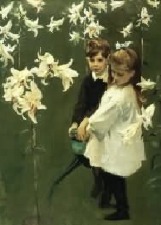
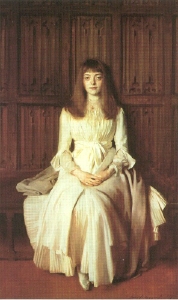
John Singer Sargent at PAM In Great Expectations: John Singer Sargent Painting Children, the Portland Art Museum has put together a comprehensive look at the career of the famous portraitist as exemplified by his paintings of children. Sargent, perhaps best known for his Portrait of Madame X,1884, is also famous for one of the best-loved images of children, Carnation, Lily, Lily, Rose, 1886. He found a revival of commercial success often hinged on images of children. After the scandal of Madame X took him into self-exile in England, he was able to charm the British upper-crust, and divert their attention from his sketchy, controversial impressionistic style, with images such as Garden Study of the Vickers Children, 1884. Sargent began his career as a portraitist by drawing the models closest at hand: his siblings. Some of these images are included in this exhibition, as is the type of painting that caused him to finally abandon portraiture in favor of landscapes and murals. Little Ruth Bacon's mother was so emotional in both praise and condemnation as the painting progressed, and Ruth as uncontrollable as any toddler, that the artist took advantage of Mom's absence one day to hastily sketch in the background, call it good, and depart. Adolescents challenged Sargent to see beyond their often veiled emotions. Sometimes, it seems he didn't try, but only painted the veil as it was shown to him. Elsie Palmer might have been a model for Edvard Munch, with her almost depressive stare and pale complexion. Also known as Young Lady in White, this painting draws one in with fine brush work and classical symmetry, but hidden emotions. It is also an example of how Sargent continued to alternate academic finesse with impressionistic painterliness, as in the Vickers scene. Overall, this show is successful on many levels: as cultural history, with examples of portraits in the grand tradition, as well as genre scenes and examples of the use of professional child models; as art history, as seen in the progression of one successful career; and as a chronicle of child psychology, and the changing role of the child within the family. It exemplifies the phrase "Great Expectations," as one can see a visual representation of the potential that is inherent in every child.
Posted by Andie DeLuca on June 18, 2005 at 15:35 | Comments (0) Comments Post a comment Thanks for signing in, . Now you can comment. (sign out)
(If you haven't left a comment here before, you may need to be approved by
the site owner before your comment will appear. Until then, it won't appear
on the entry. Thanks for waiting.)
|

| s p o n s o r s |
 |
 |
 |
|
 |
|
 |
|
 |
|
 |
|
 |
|
 |
|
 |
|
 |
|

|
Site Design: Jennifer Armbrust | • | Site Development: Philippe Blanc & Katherine Bovee | |