|

|
|||
|
Portland art blog + news + exhibition reviews + galleries + contemporary northwest art
|
||||




BYOTV Presents Media Archeology 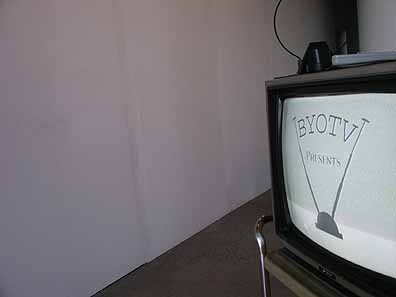 On Saturday April 19th @ 7pm, The Video Gentlemen present "Media Archeology," the second in-studio live broadcast as they continue to program their BYOTV installation at NAAU. Featuring research and analysis, questions and answers from Stephen Slappe and a really intriguing presentation by art historian Kate Mondloch (come to the gallery and phone in your ?'s): Static Age: The Early Years of Television Culture A presentation by Stephen Slappe This program of archival 16mm films examines the early years of television as a technological and cultural phenomenon. The program includes behind-the-scenes glimpses at television studios as well as references to television in popular culture from the 1930's to the 1960's. Look at This: The Problem of Participation in 1970s Video Installation A presentation by Kate Mondloch Look at This scrutinizes how media objects and their customary viewing regimes actively define the relationship between bodies and screens in media installation art. The talk complicates the notion of an inherently progressive, liberatory "spectator participation" that is celebrated in most accounts of media installation by detailing the ways in which screens are also capable of generating oppressive viewing conditions that strictly delimit the viewer's interaction with the work. Mondloch states: "As in everyday life, screens and their illuminated moving images can offer a sort of siren song-calling spectators to largely involuntary behavior, begging them to look and pay attention, and to discipline themselves and their bodies in the process. The talk analyzes a series of influential closed-circuit video installations that intentionally explore the "architectures" of media spectatorship, including Frank Gillette and Ira Schneider's pioneering Wipe Cycle (1969), Bruce Nauman's video corridor works (1969-72), and Dan Graham's Present Continuous Past(s) (1974). I analyze how these early video works employ two apparently contradictory processes. Artists underscore the coercive nature of screen-based viewing by varying the arrangement of cameras and monitors-combining live and pre-recorded feedback, inverting viewers' images, divorcing cameras from their monitors, introducing time delays, and so on. Simultaneously, however, the technological apparatuses themselves arguably impose precise kinesthetic and psychic effects upon their audiences. This discrepancy between active and passive viewership presents an unresolved paradox for the artform's criticism." Posted by Jeff Jahn on April 17, 2008 at 14:04 | Comments (0) Comments Post a comment Thanks for signing in, . Now you can comment. (sign out)
(If you haven't left a comment here before, you may need to be approved by
the site owner before your comment will appear. Until then, it won't appear
on the entry. Thanks for waiting.)
|
| s p o n s o r s |
 |
 |
 |
|
 |
|
 |
|
 |
|
 |
|
 |
|
 |
|
 |
|
 |
|
 |
|

|
Site Design: Jennifer Armbrust | • | Site Development: Philippe Blanc & Katherine Bovee | |